Environment Design · UE4 · Houdini · AI
Market Alley
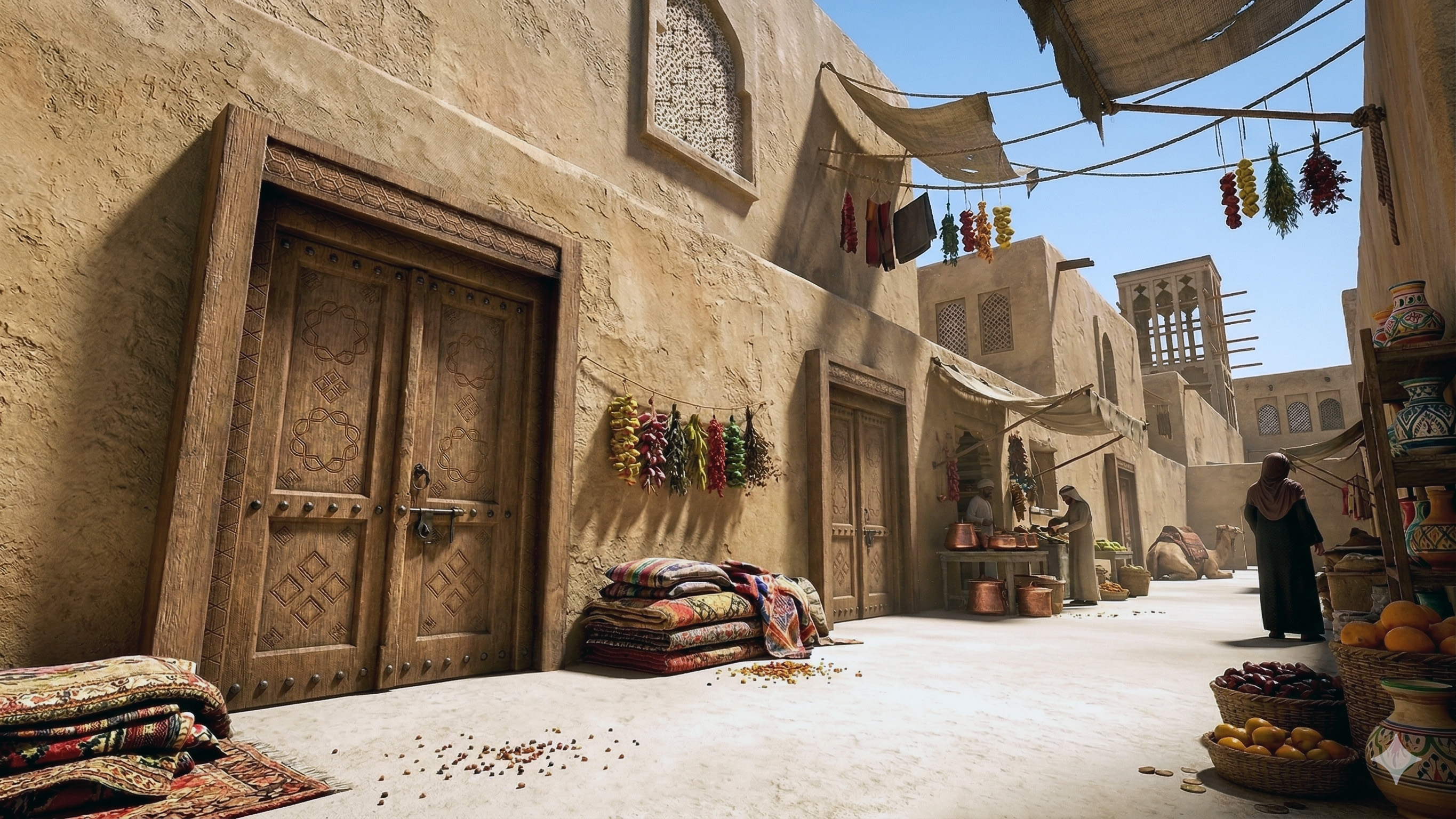
A stylized Central Asian bazaar — researched, procedurally built, and atmospherically extended into an immersive real-time environment.
Concept to Experience
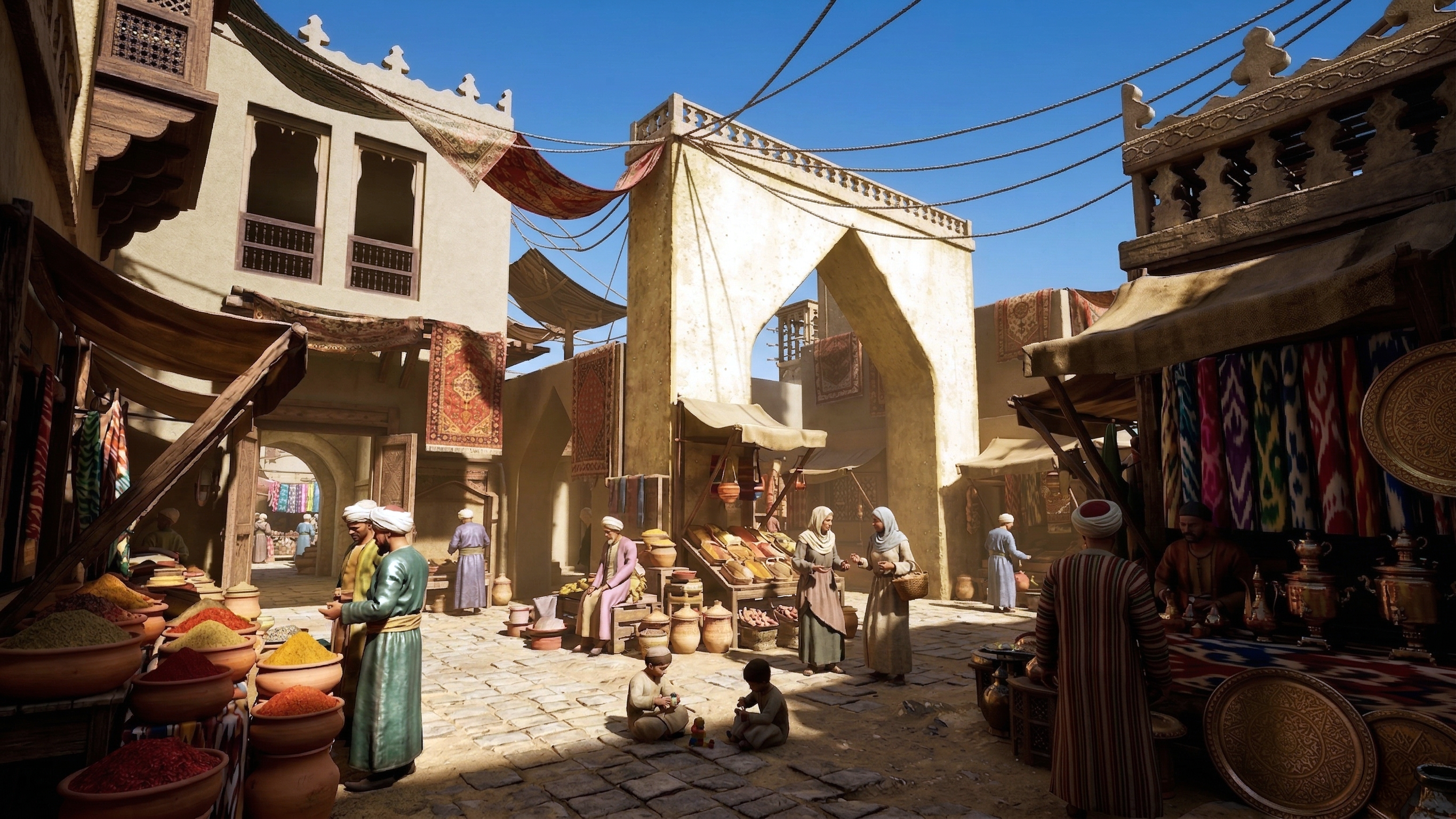
Market Alley began as a three-week environment study — but the thinking behind it ran much deeper. The goal was to translate centuries of Central Asian market culture into a cohesive, navigable world built for real-time rendering.
The alley format — tight, layered, full of texture and human presence — became the ideal frame for exploring how historical spaces communicate through architecture, material, and light.
Built entirely in three weeks as a student environment project, the pipeline ran from reference research through Houdini procedural workflows, Maya modeling, Substance Painter texturing, and final scene assembly in Unreal Engine 4.
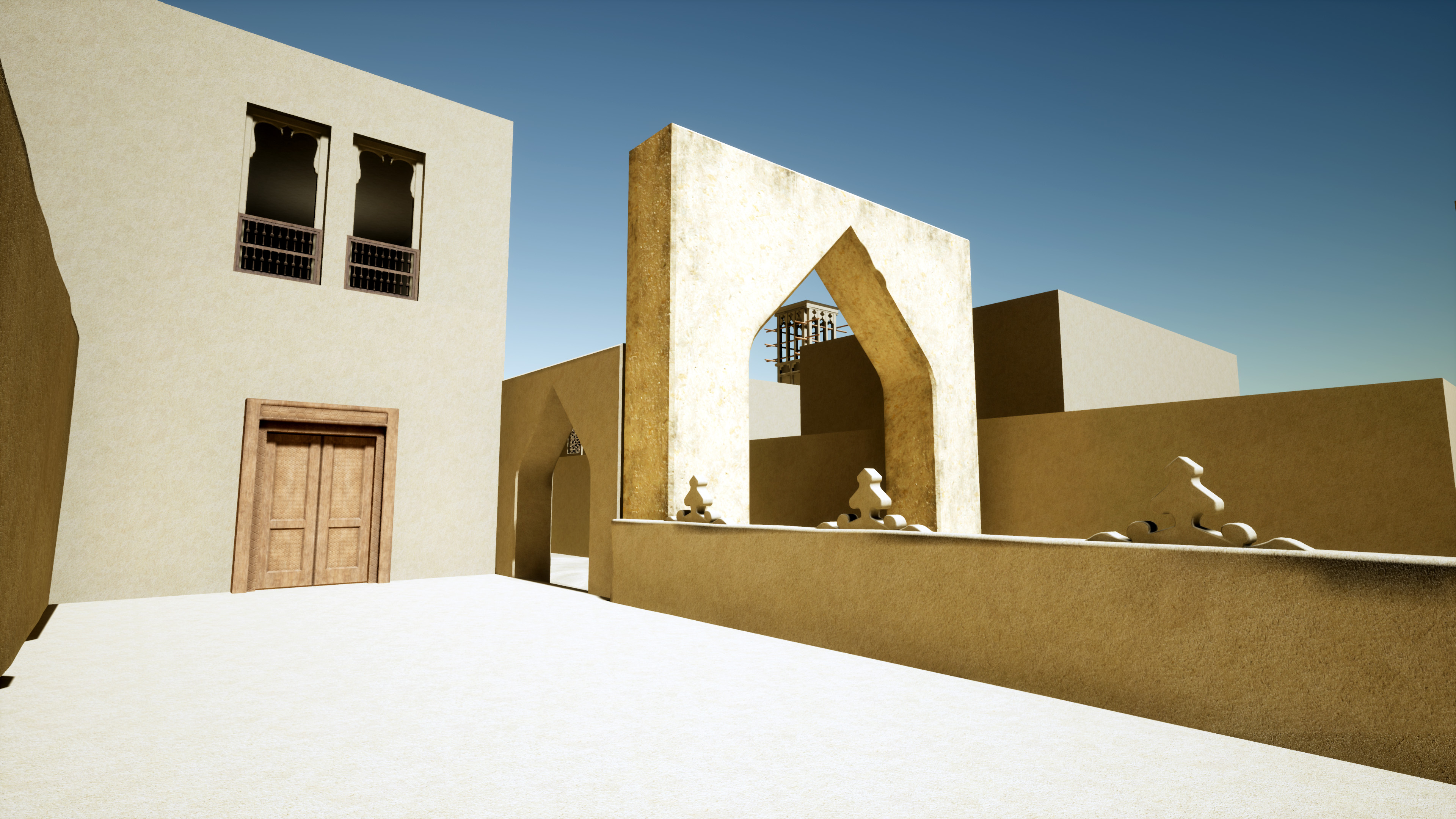
Unreal Engine 4 — Front View
Research
Architectural Archeology
Samarqand · Bukhara · Isfahan
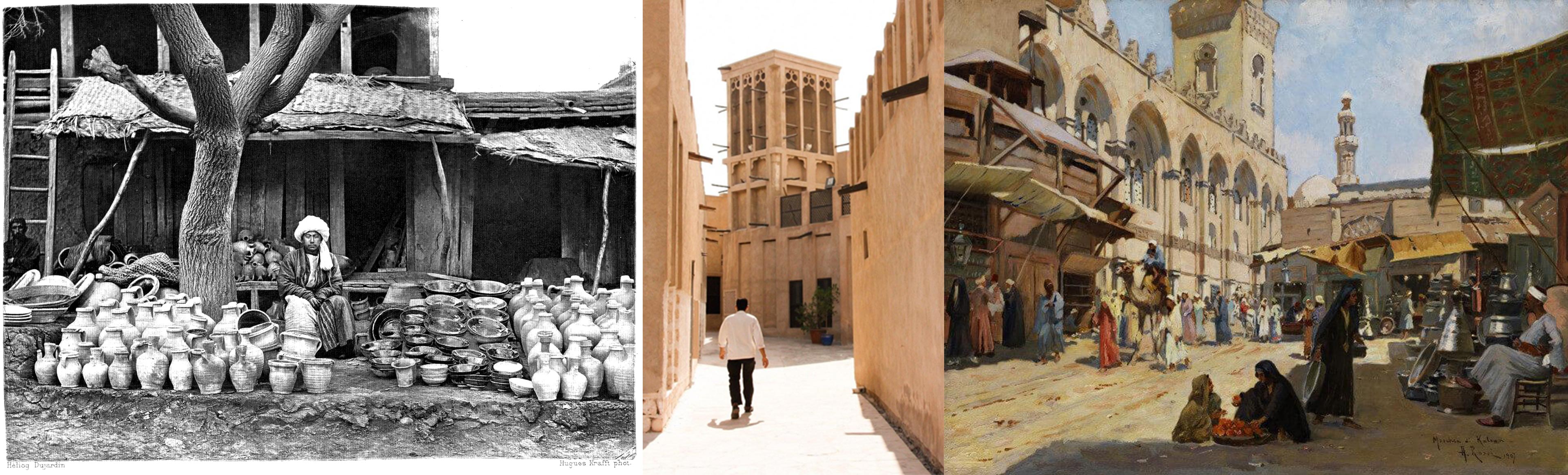
Reference board — field photography · hover to reveal color
"For centuries, markets across Samarqand, Bukhara, and Isfahan served as crossroads of trade, craft, and culture — every surface a record of time and use."
Structural Rhythms
Iwan portals, Muqarnas vaulting, and layered arcade facades formed the geometric foundation. Simplified into bold, readable silhouettes suited for a stylized real-time world — keeping the cultural grammar intact while making it performant.
Materiality
The visual language centers on contrast: rough porous stone against glazed ceramic, sun-baked clay beside woven textiles, worn plaster over tile. The palette derives from the oxidation of turquoise tiles against the warm clay of the Silk Road.
Pottery & Trade Culture
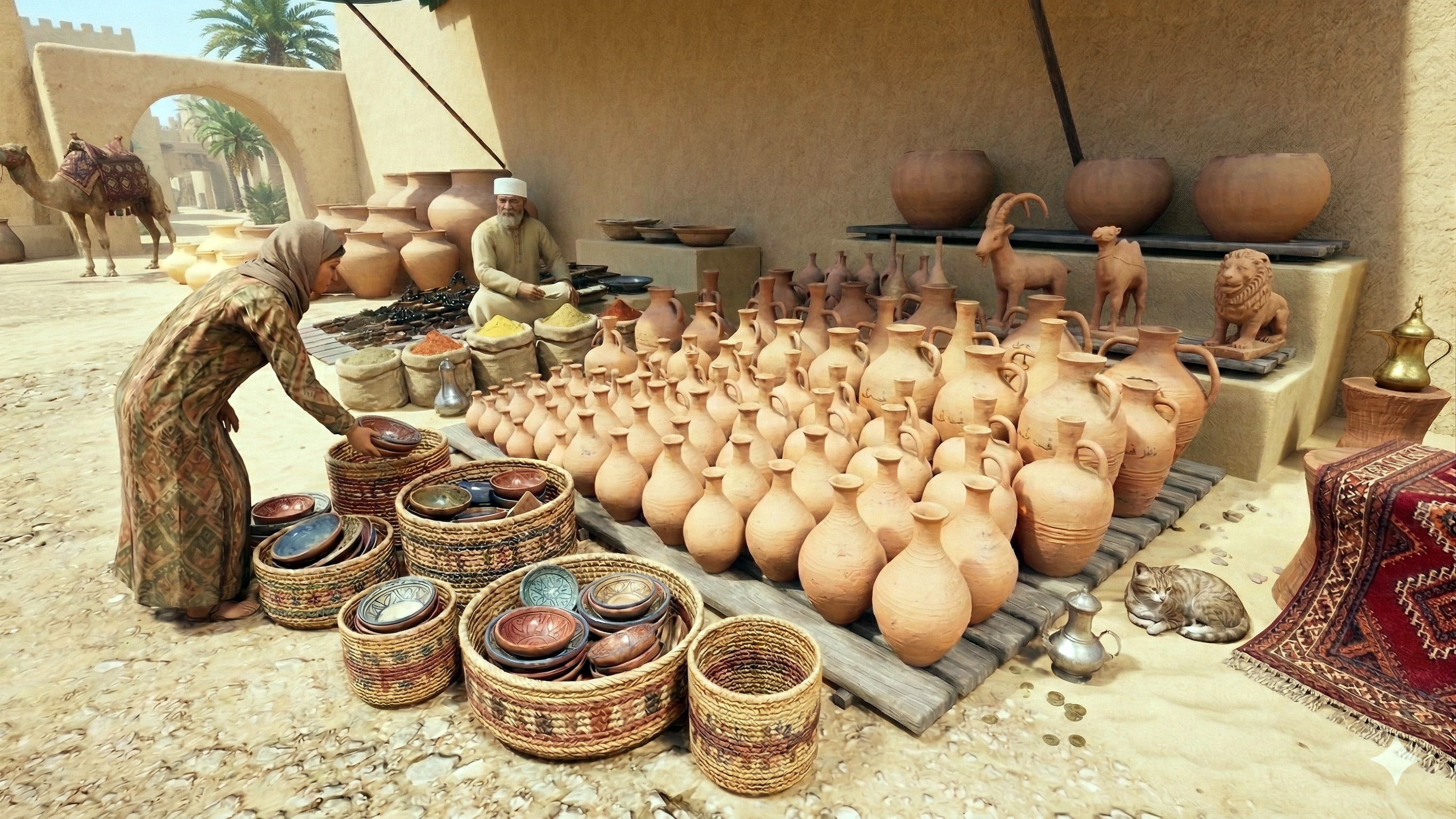
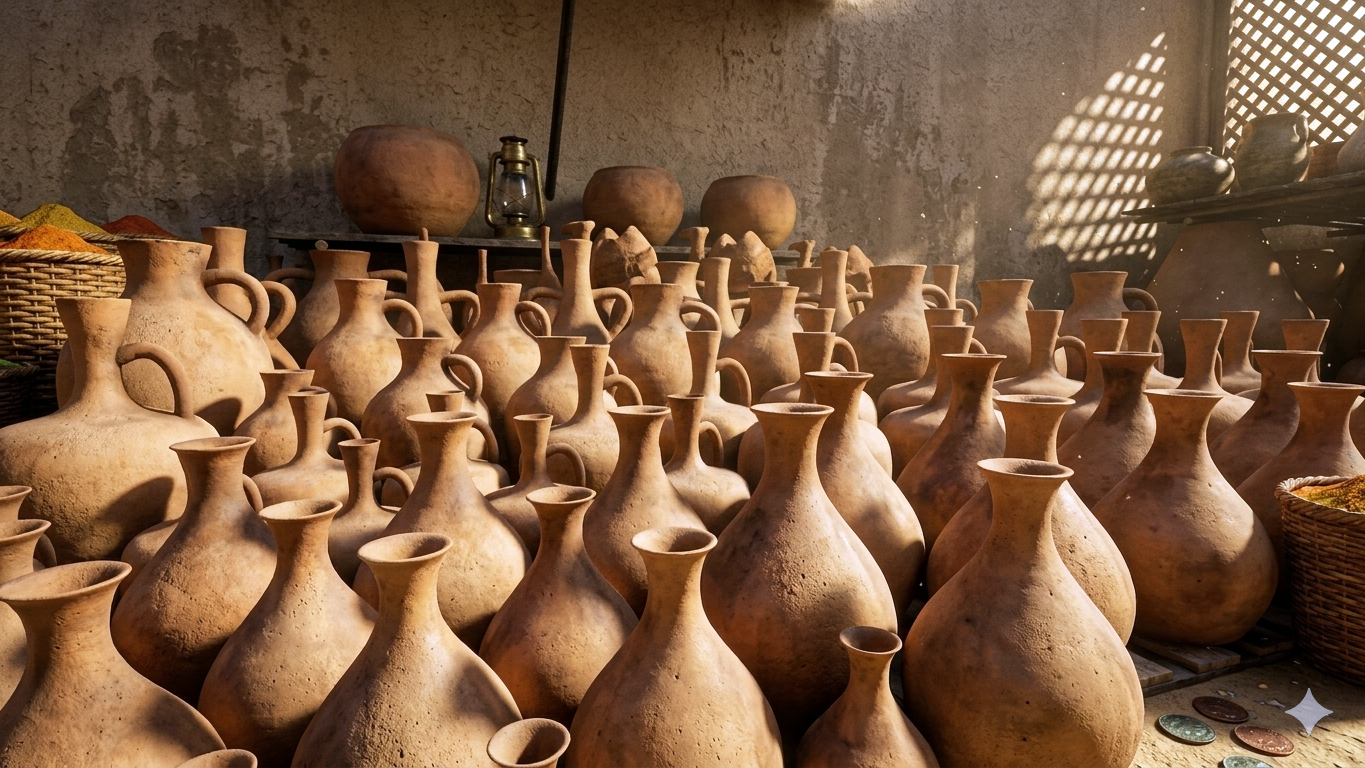
Markets in this region were defined by their crafted objects — stacked vessels, draped textiles, scattered goods. These became both narrative props and an opportunity for procedural asset generation through Houdini.
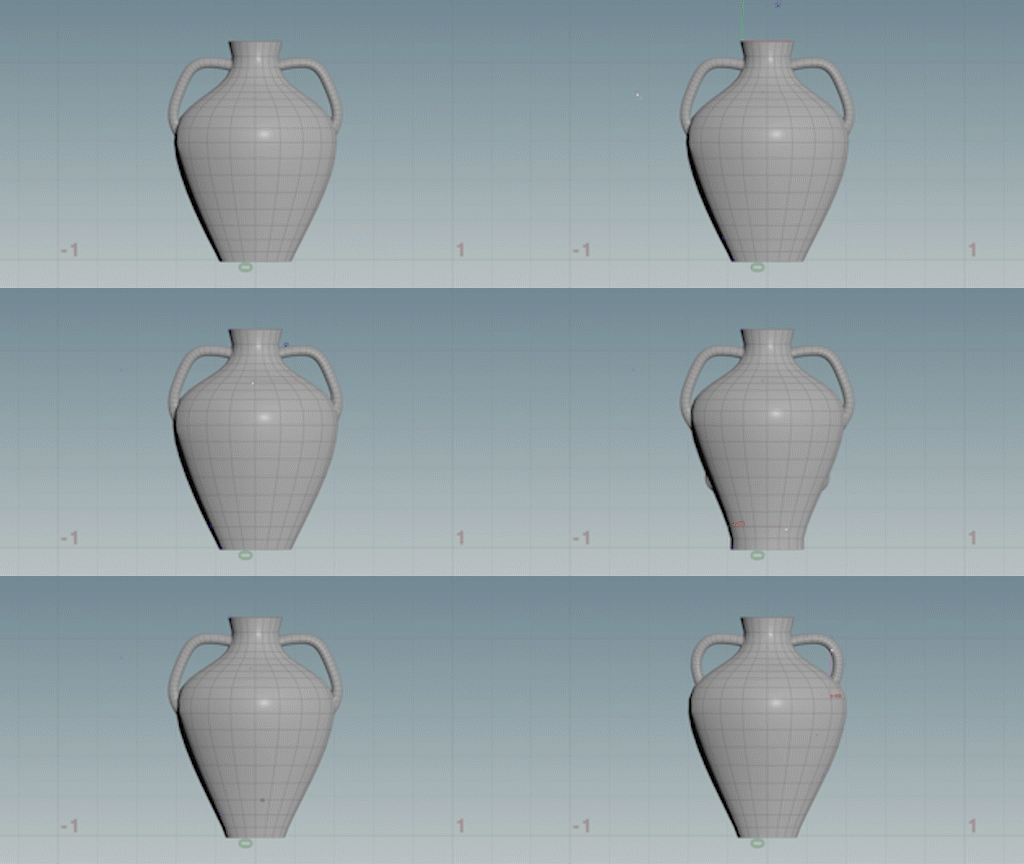
Houdini HDA — procedural pottery via NURBS curve manipulation
Houdini
Proceduralizing the Mundane
A market alley lives or dies by asset variety. Ten identical pots break immersion. A hundred unique ones build a world. The solution was procedural — building Houdini Digital Assets (HDAs) that parameterized pottery form, silhouette, and proportion through NURBS curve manipulation.
This wasn't just about speed. Procedural workflows enforce a kind of stylistic discipline — every asset drawn from the same logic stays proportionally coherent, historically consistent, and visually unified. It connects directly to prototyping thinking: test fast, iterate, lock in what works.
50+
Unique pottery assets generated
1 HDA
Single asset driving full variation
Grounded in the Real
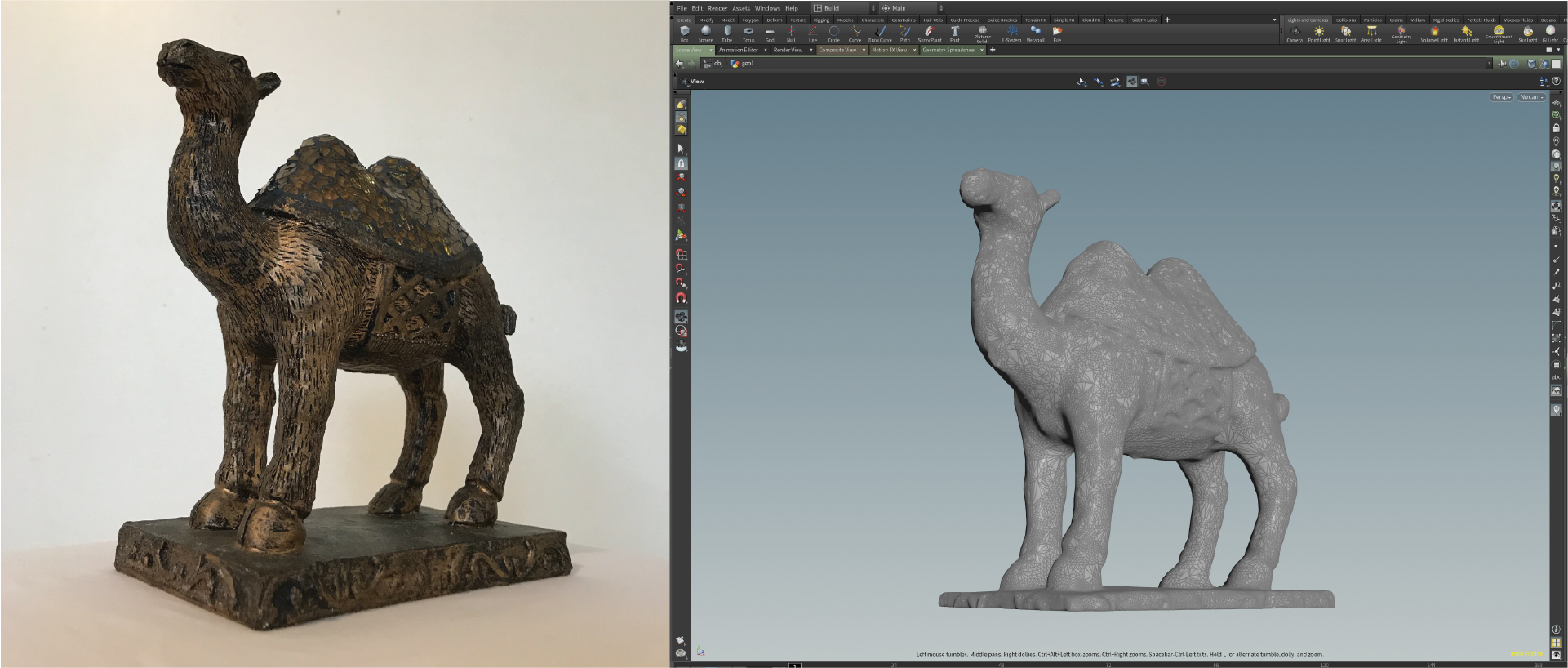
A photogrammetry pass of a small wooden camel added tactile, grounded detail to the set — bridging the gap between stylized assets and believable material memory.
Where procedural tools enabled scale and variation, photogrammetry brought the kind of specificity that only physical objects carry — weight, history, imperfection.
Final Showcase
Research
References · Culture
Concept
Interpretation · Form
Houdini
Procedural · Assets
UE4
Foundation · Scene
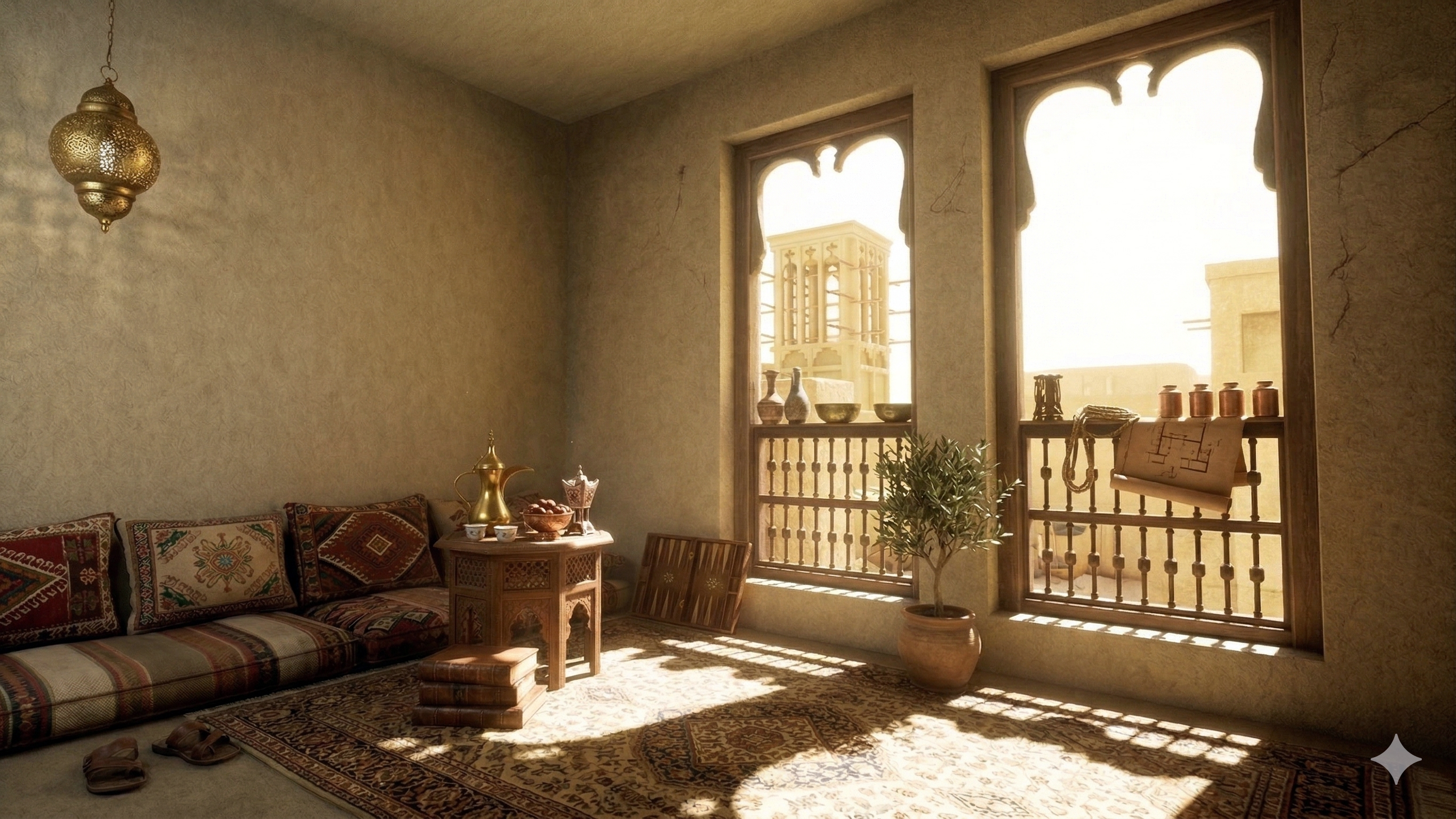
AI
Mood · Enhancement