Imaginary Worlds · Houdini · Unity · Architectural Study
Sister
Shrine
Reconstruction and reinterpretation of an imaginary architectural subject — from reference analysis through procedural Houdini rebuild to a spatial Unity presentation and a full remake.
Project Overview
Imaginary Worlds Course
Houdini
Unity
The Chronicles of Riddick
A four-phase study of an imaginary world — analyze, rebuild, present, reinterpret.
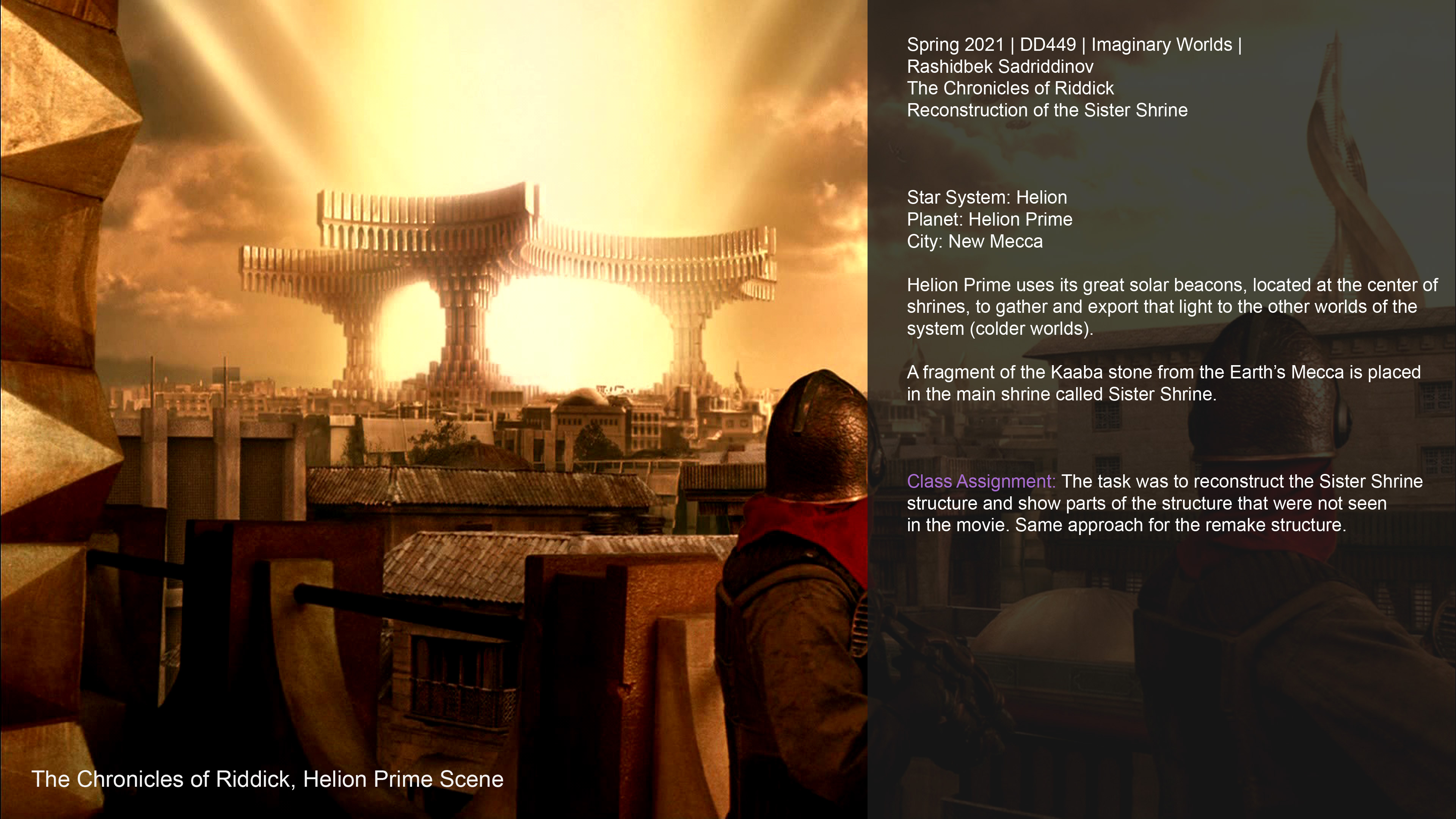
I chose The Chronicles of Riddick (2004) and focused on the Sister Shrine — a structure defined by its severe geometry, imposing scale, and the contrast between sacred and brutal architectural language. Specific enough to study closely, complex enough to learn from.
The process followed a clear arc: analyze the reference → break down the structure → rebuild it procedurally in Houdini → present it spatially in Unity → create a remake through my own design interpretation. The value of the analysis phase only fully reveals itself at the end — in the choices made when breaking from the original.
Phase 01
Project Goals
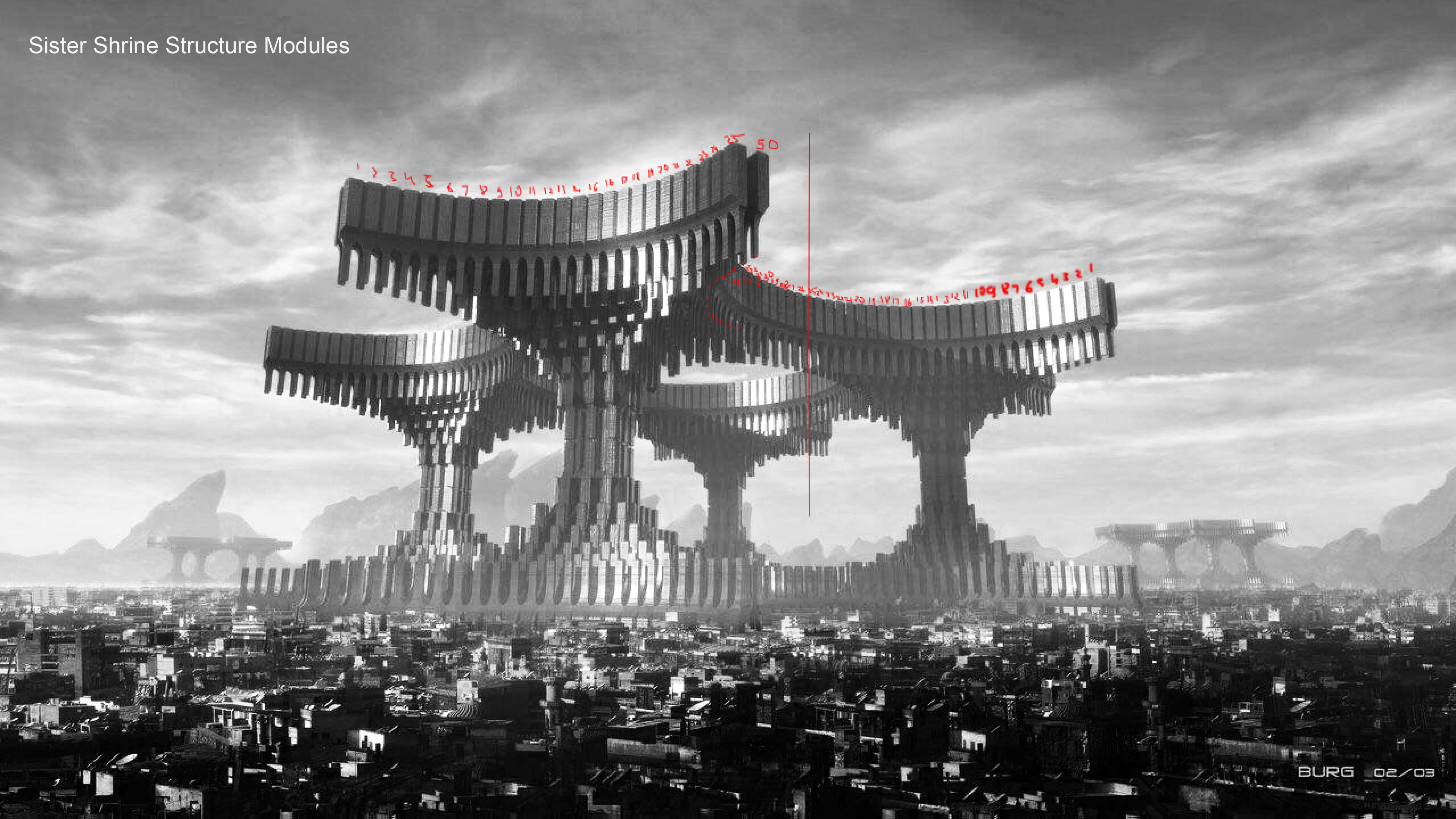
The goal of this project was to reconstruct the Sister Shrine from the limited exterior views shown in the film and extend the unseen portions of the structure in a way that felt believable and consistent with the original design. Since this was a short-term project, I focused only on the exterior, as that was the only part visible on screen, rather than exploring interior spaces. The same approach carried into the remake phase, where the original structure served as a foundation for reinterpretation and further development.
Phase 02
Architectural Analysis
Before touching any tools, the work began with close observation. The Sister Shrine's geometry — its vertical thrust, modular repetition, and the interplay between mass and ornament — had to be understood on its own terms before it could be rebuilt. In The Chronicles of Riddick, this architectural language is shaped by a fusion of Baroque, Art Deco, and Islamic influences, visible not only in the buildings, but also in the spacecraft, clothing, furniture, and overall scene aesthetics. Understanding the shrine, then, meant reading it as part of a larger design system rather than as an isolated structure.
Phase 03
Procedural Reconstruction
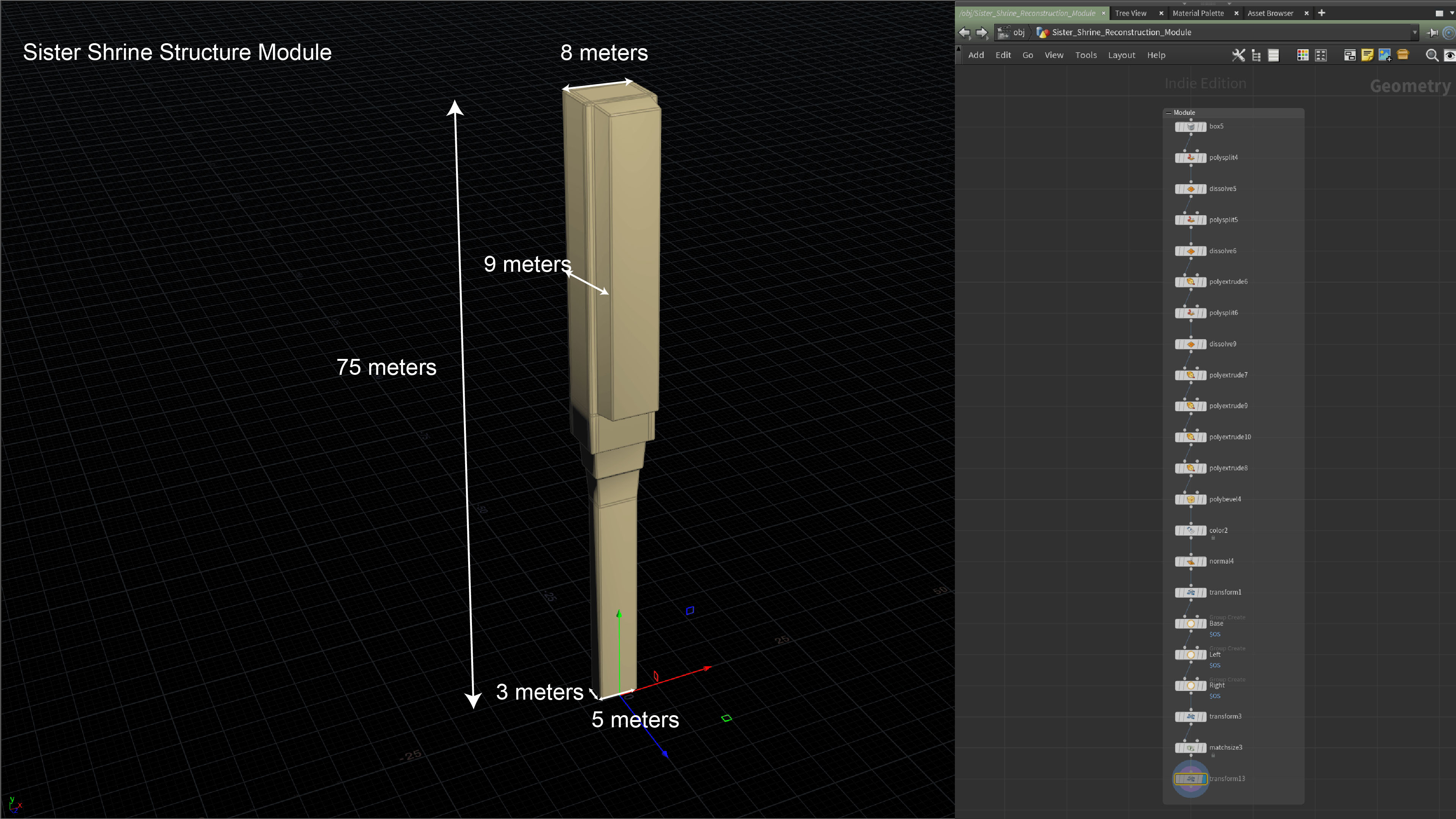
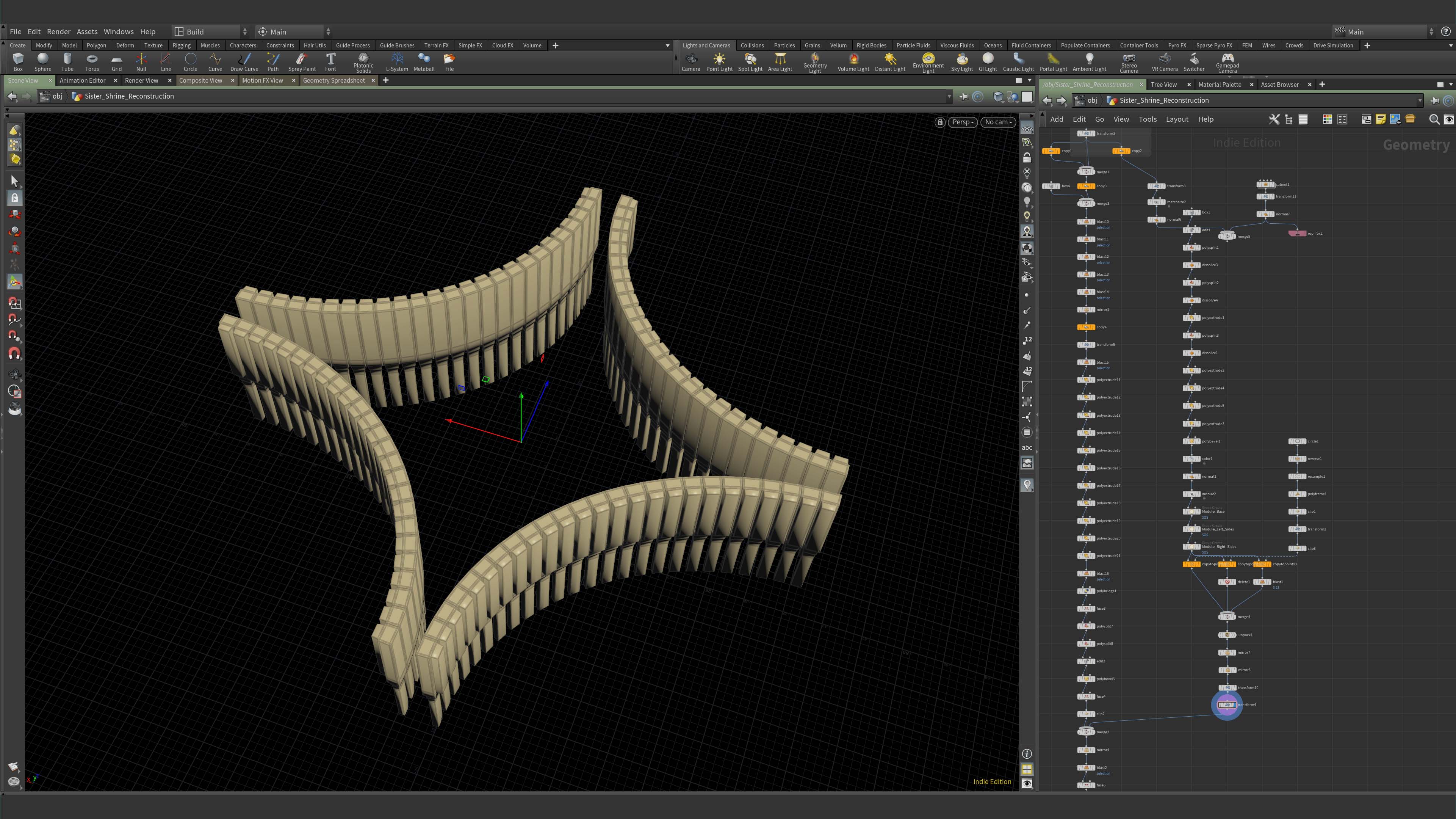
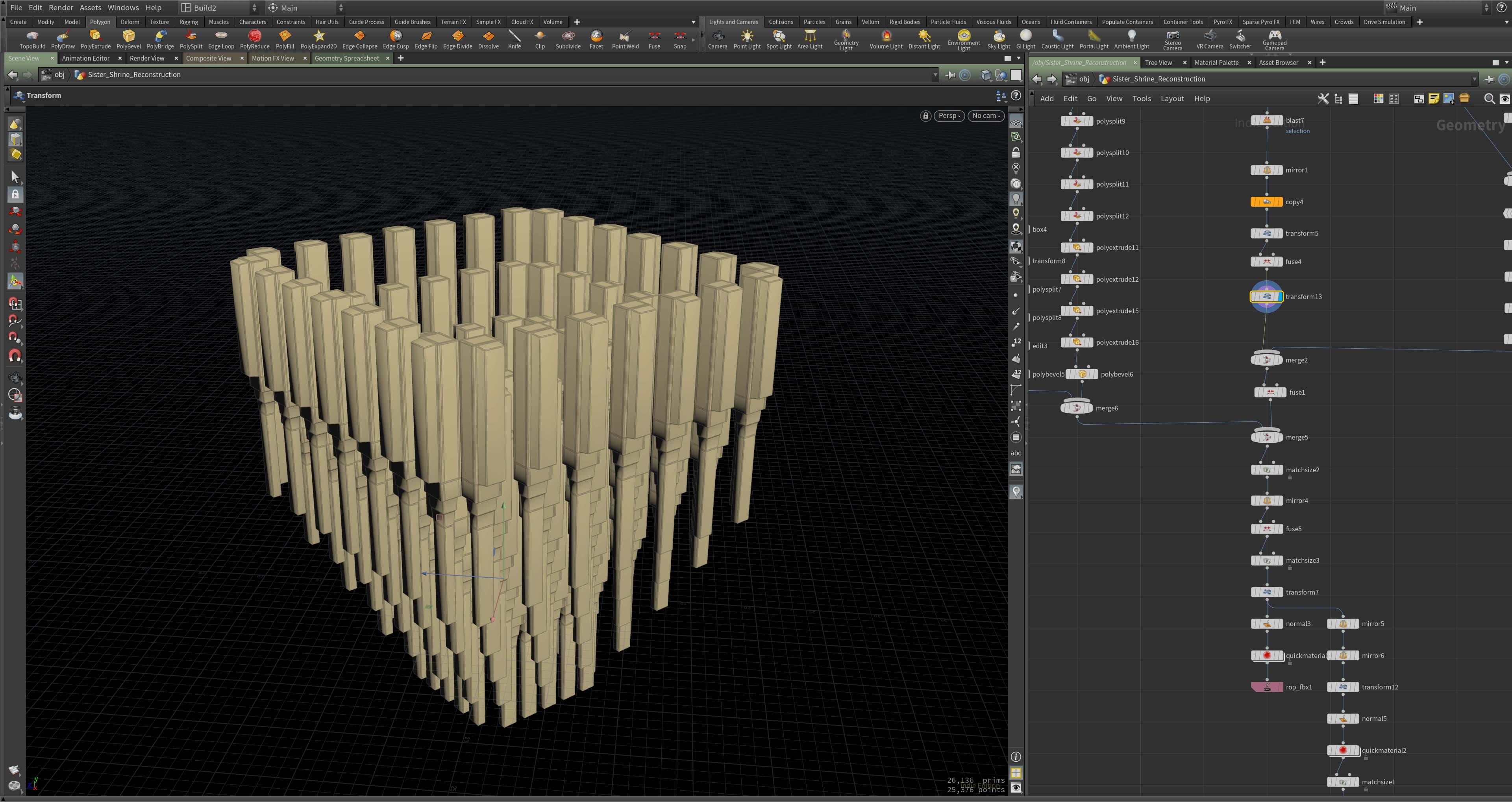
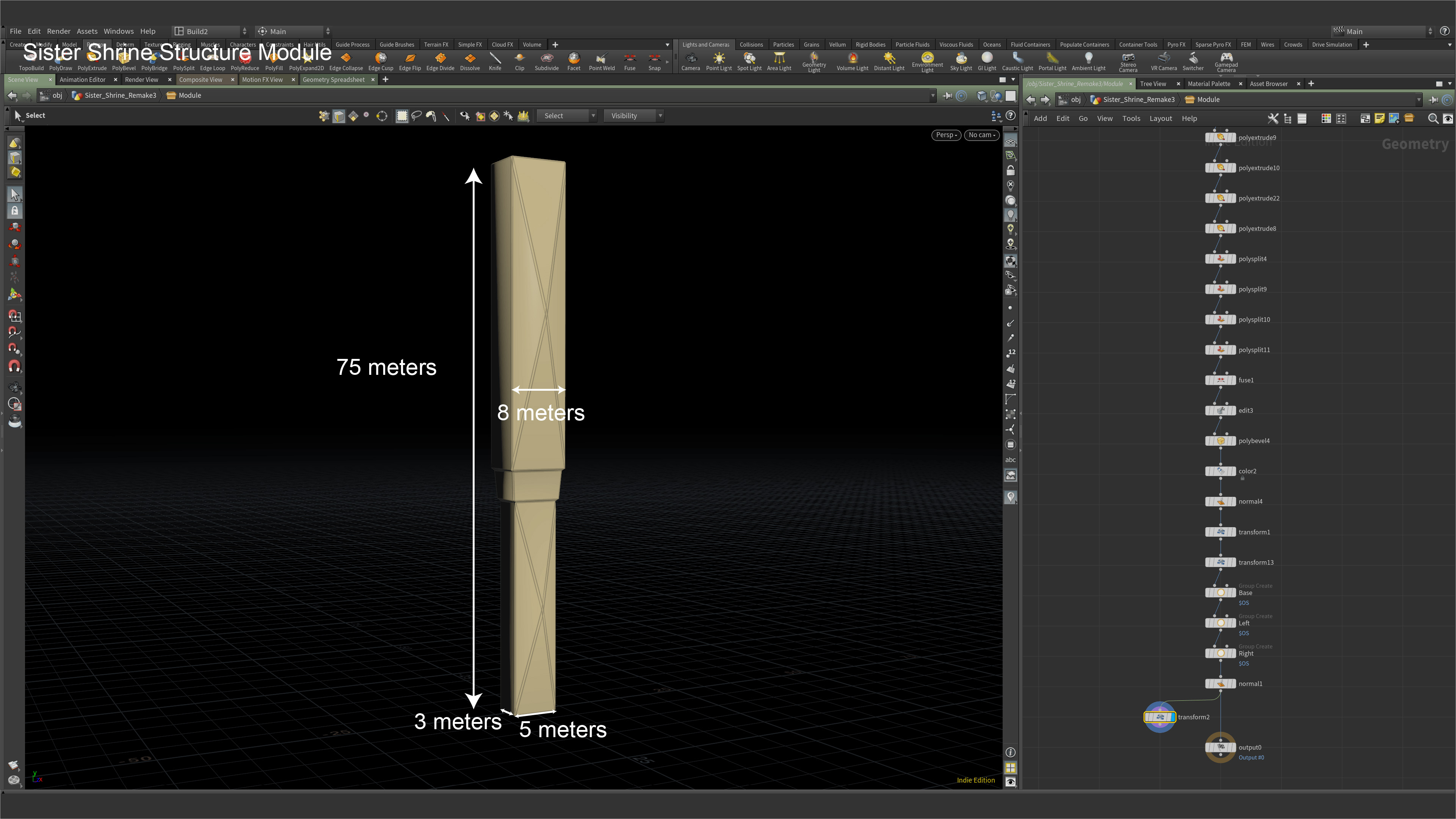
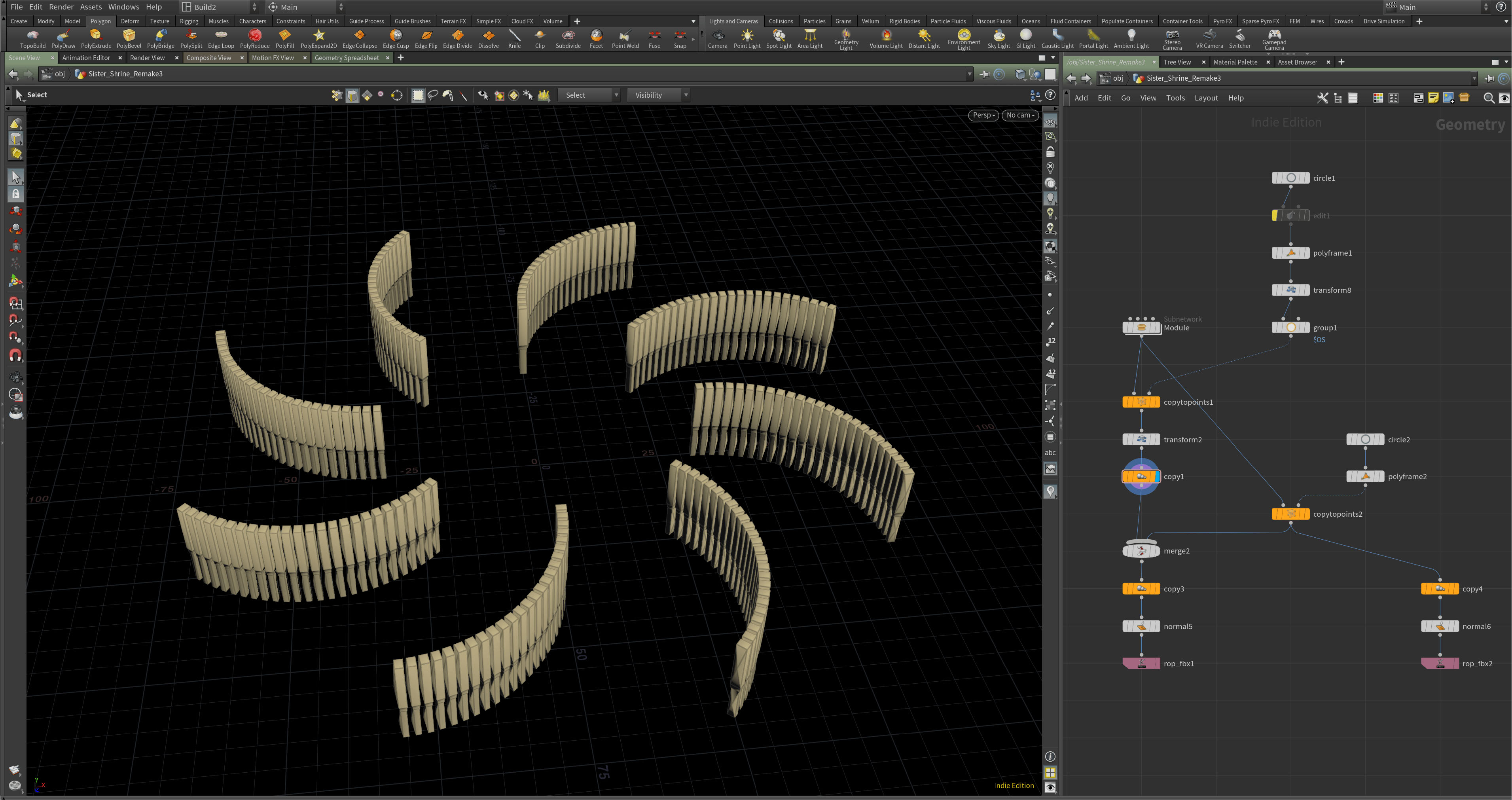
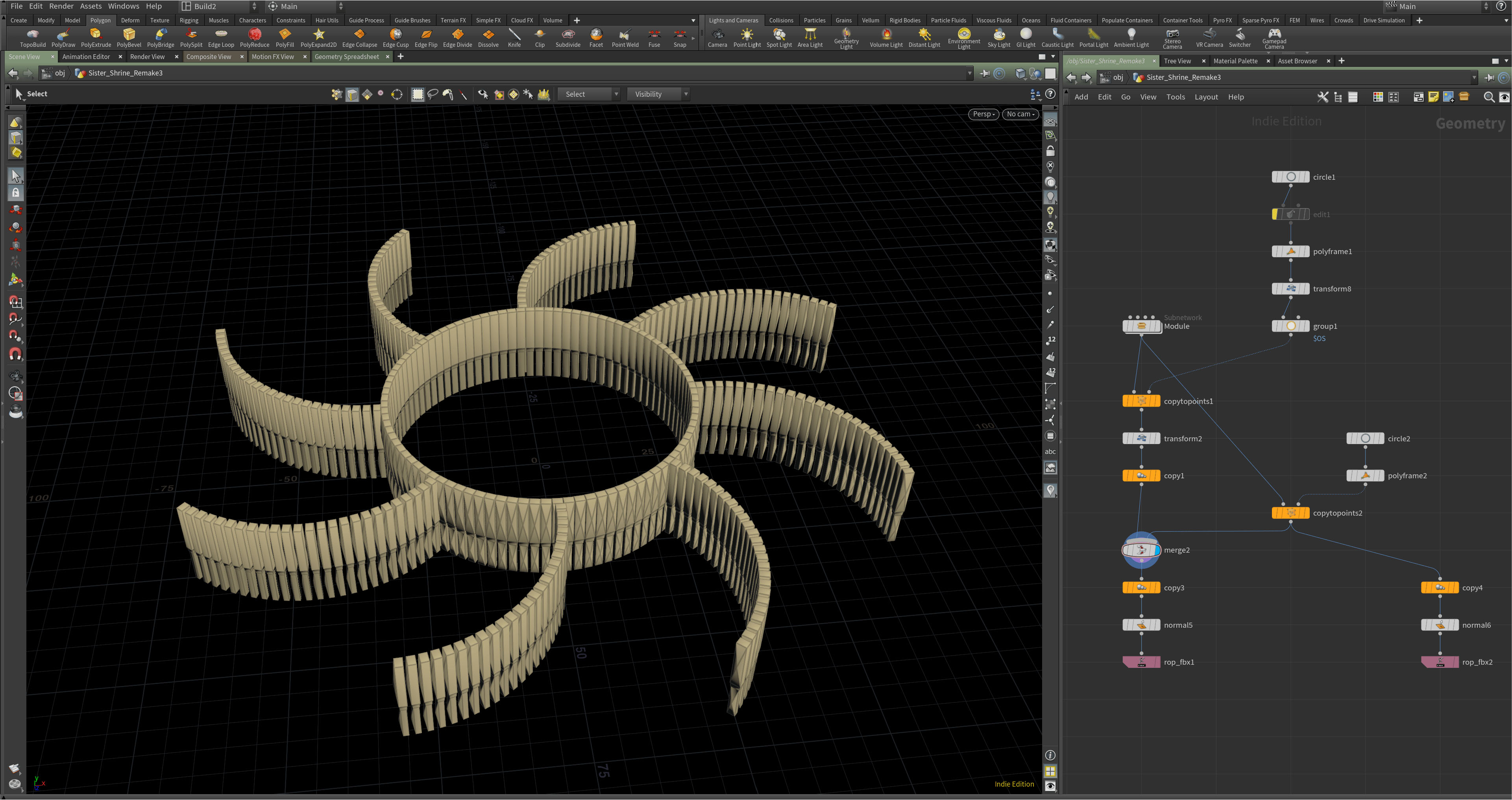
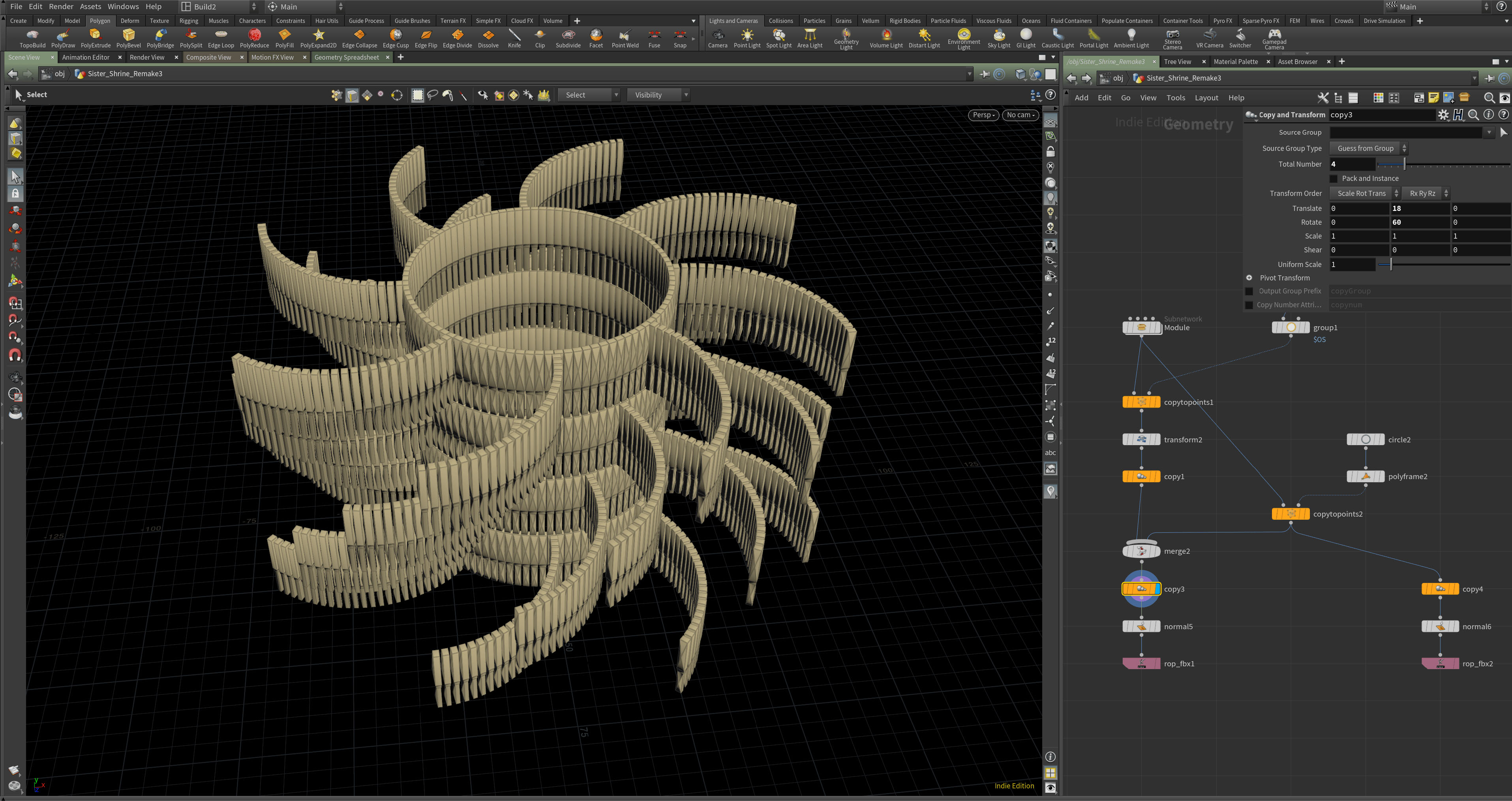
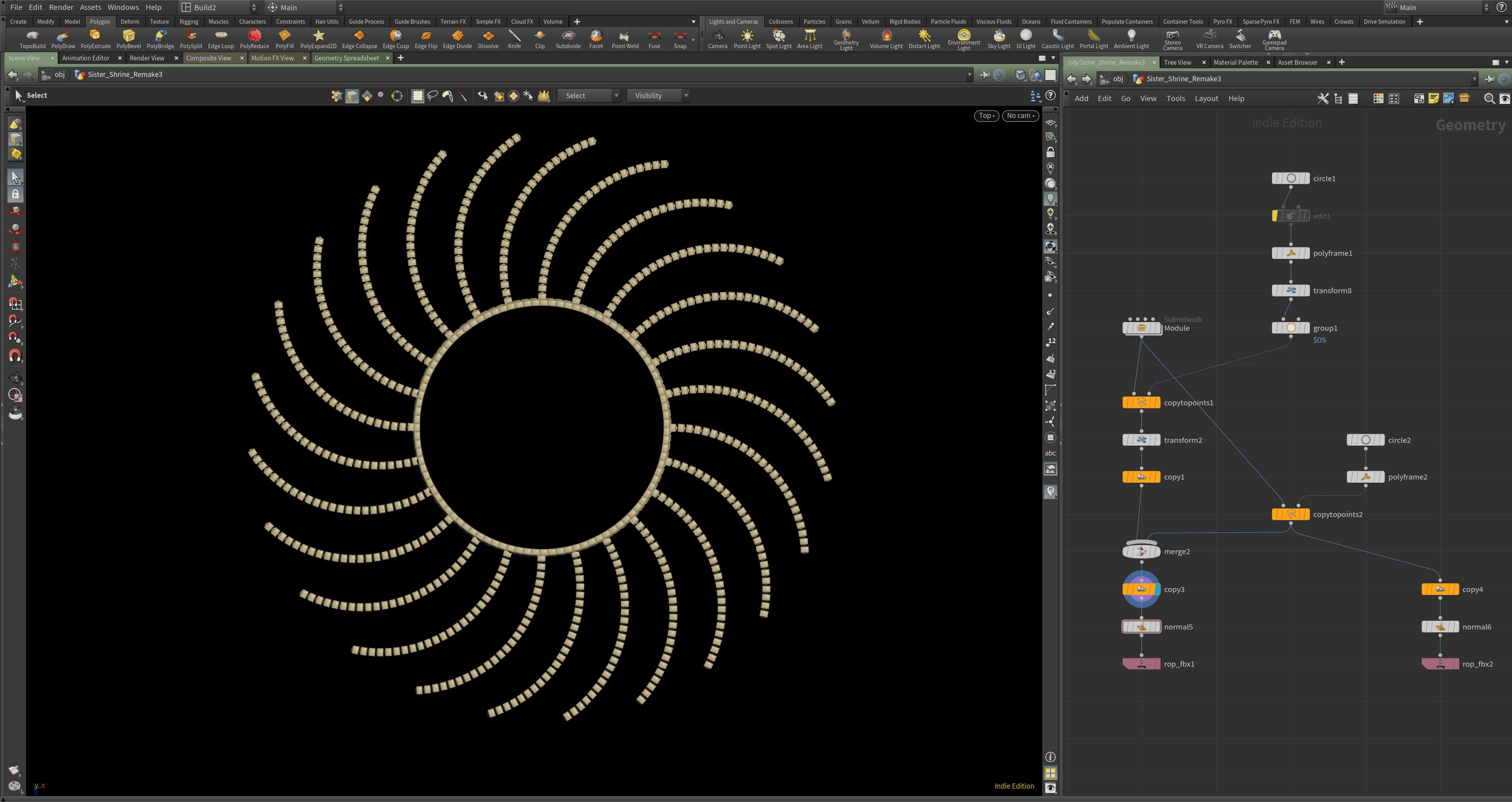
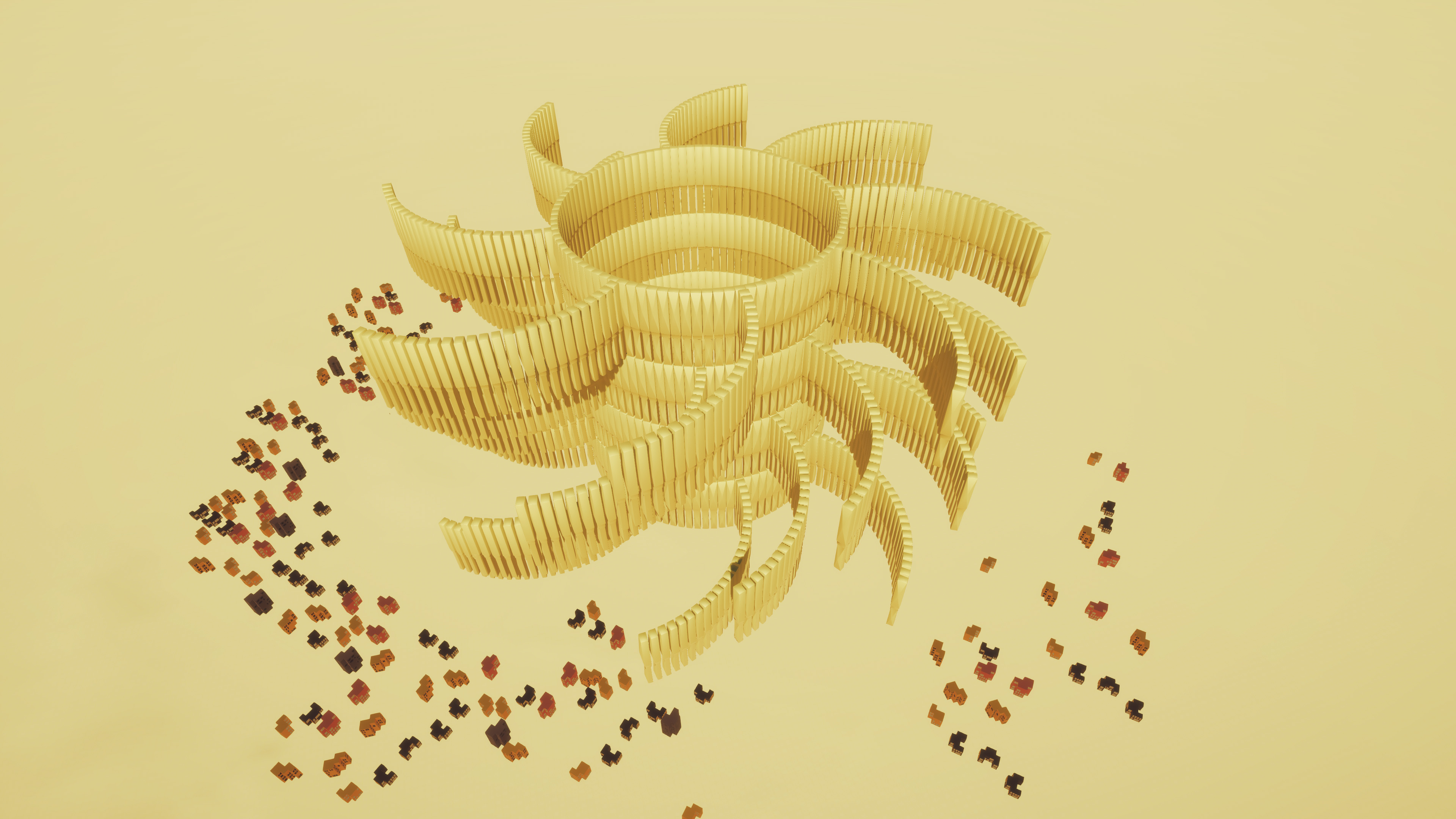
Houdini was the right tool for this task. Its node-based logic made it possible to rebuild the Sister Shrine step by step — each decision visible, each iteration non-destructive. This wasn't modeling from scratch: it was reconstruction as a discipline.
The procedural approach enforced precision where intuition would have wandered. Proportions stayed consistent. The node graph became a record of analytical thinking — every step traceable back to a decision about the original design.
01
Framework
Establishing primary volumes and vertical proportions from reference frames.
02
Modular Systems
Breaking the shrine into repeatable modules — columns, arches, ornamental bands.
03
Detail Pass
High-frequency surface detail and material blocking for atmospheric read.
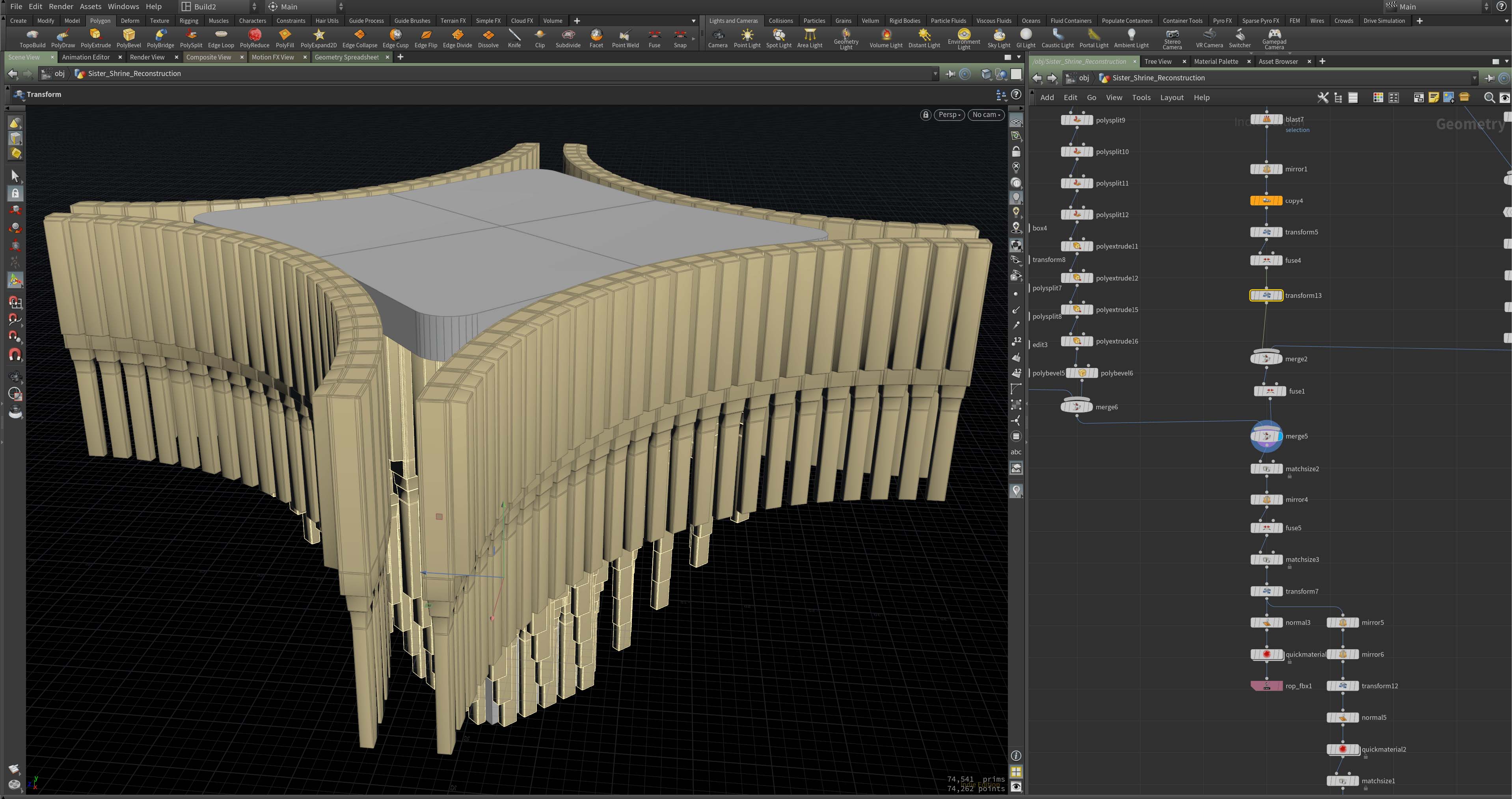
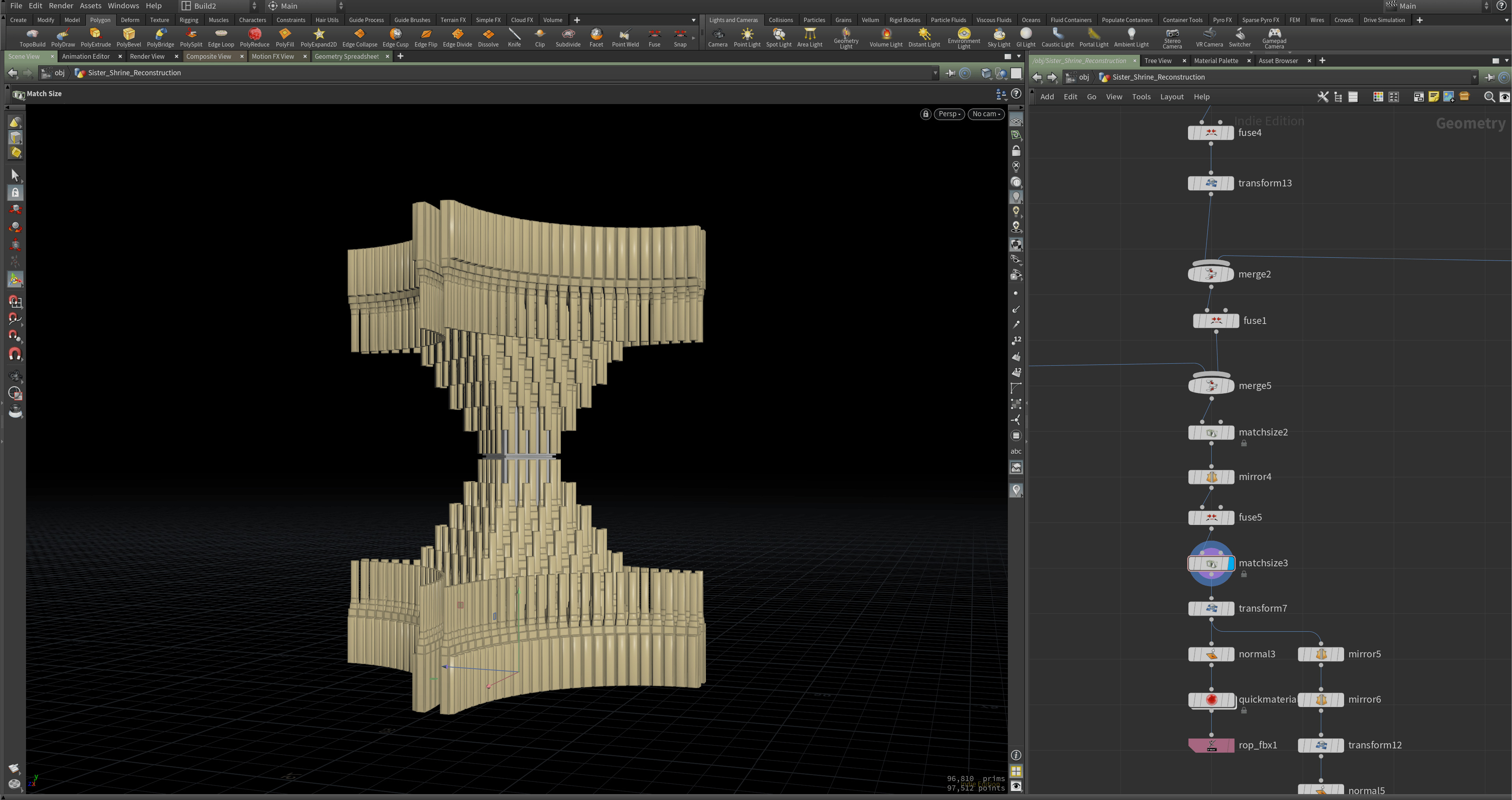
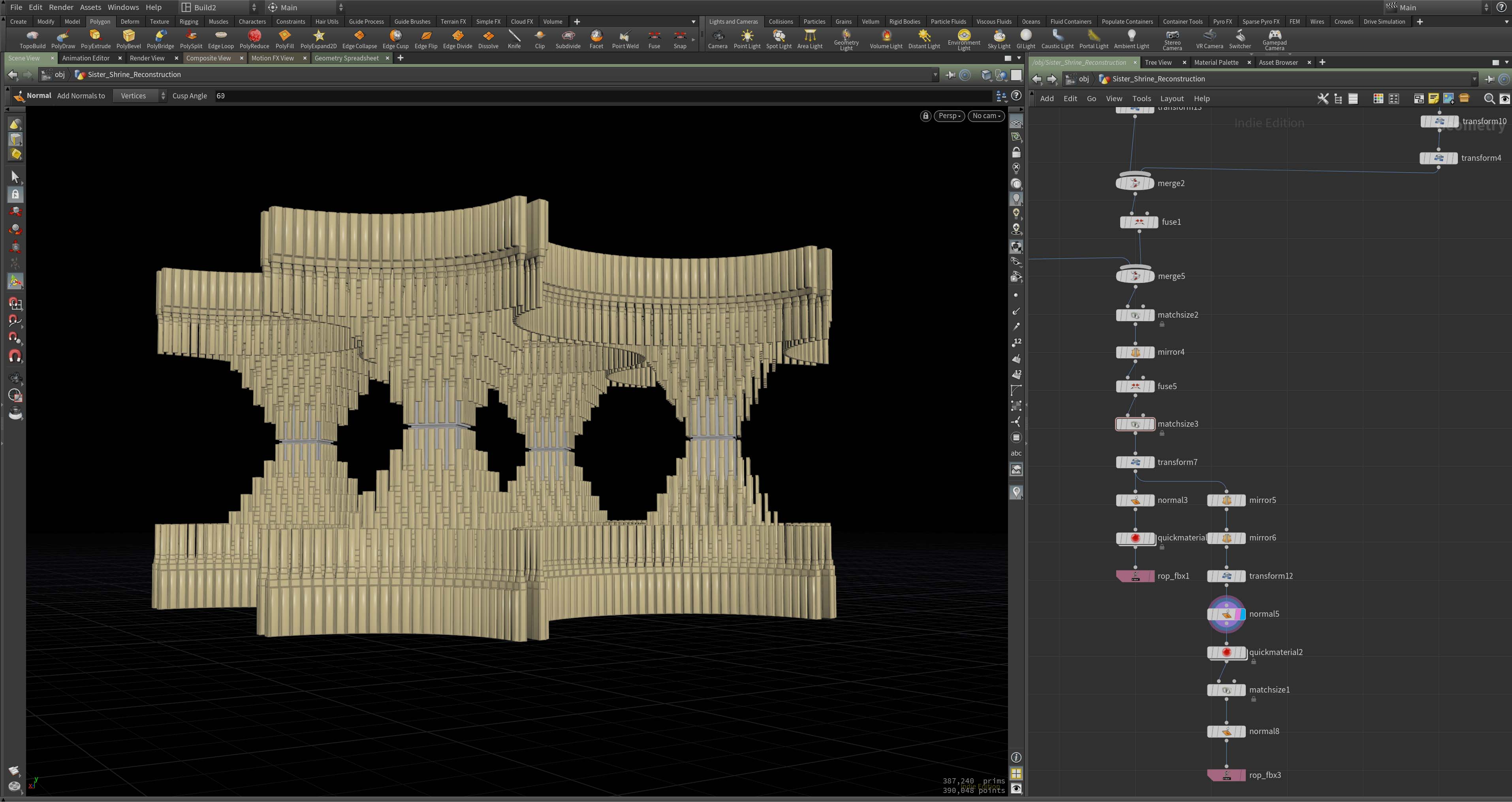
Procedural
Phase 04
Unity — Spatial Presentation
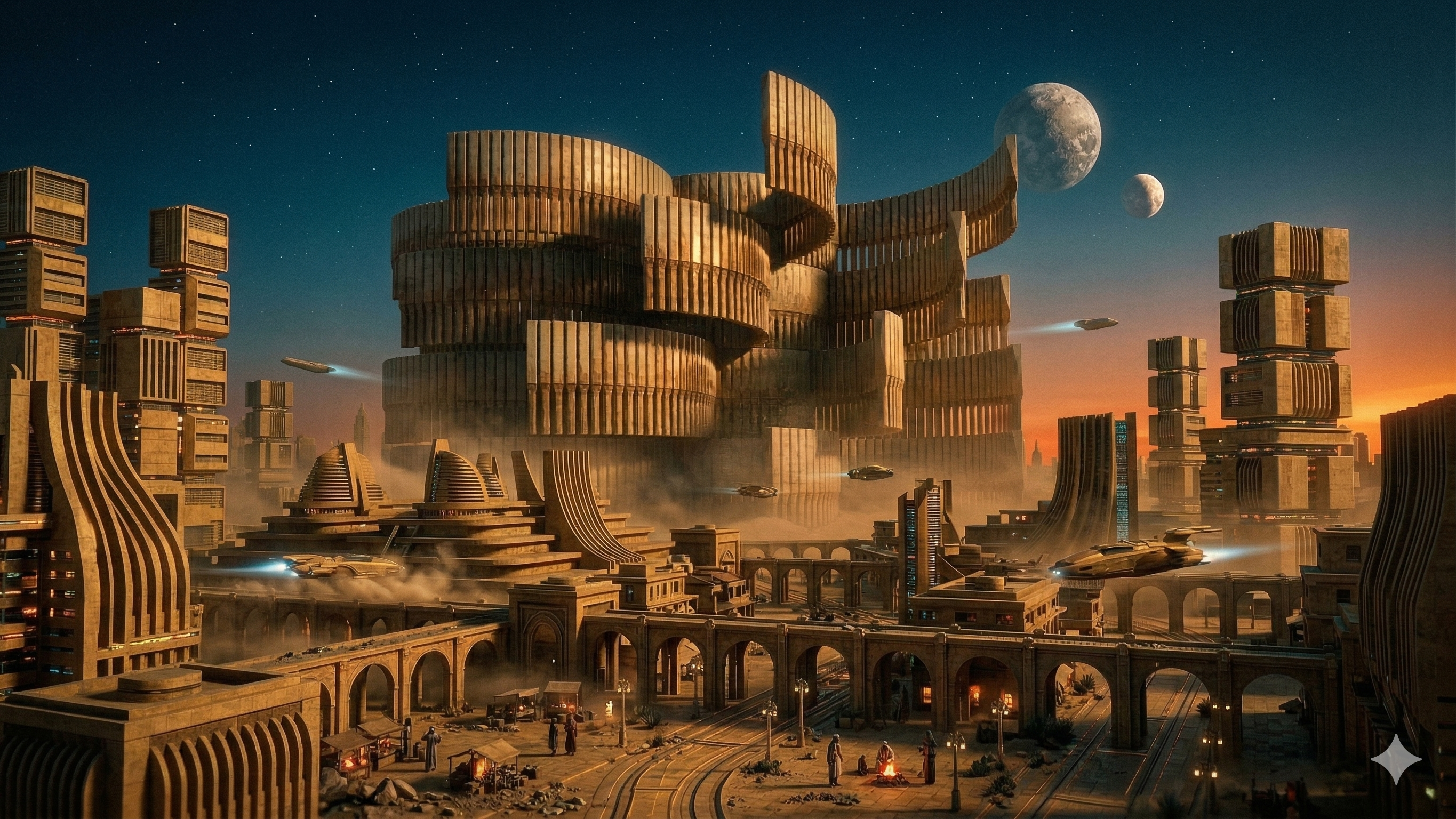
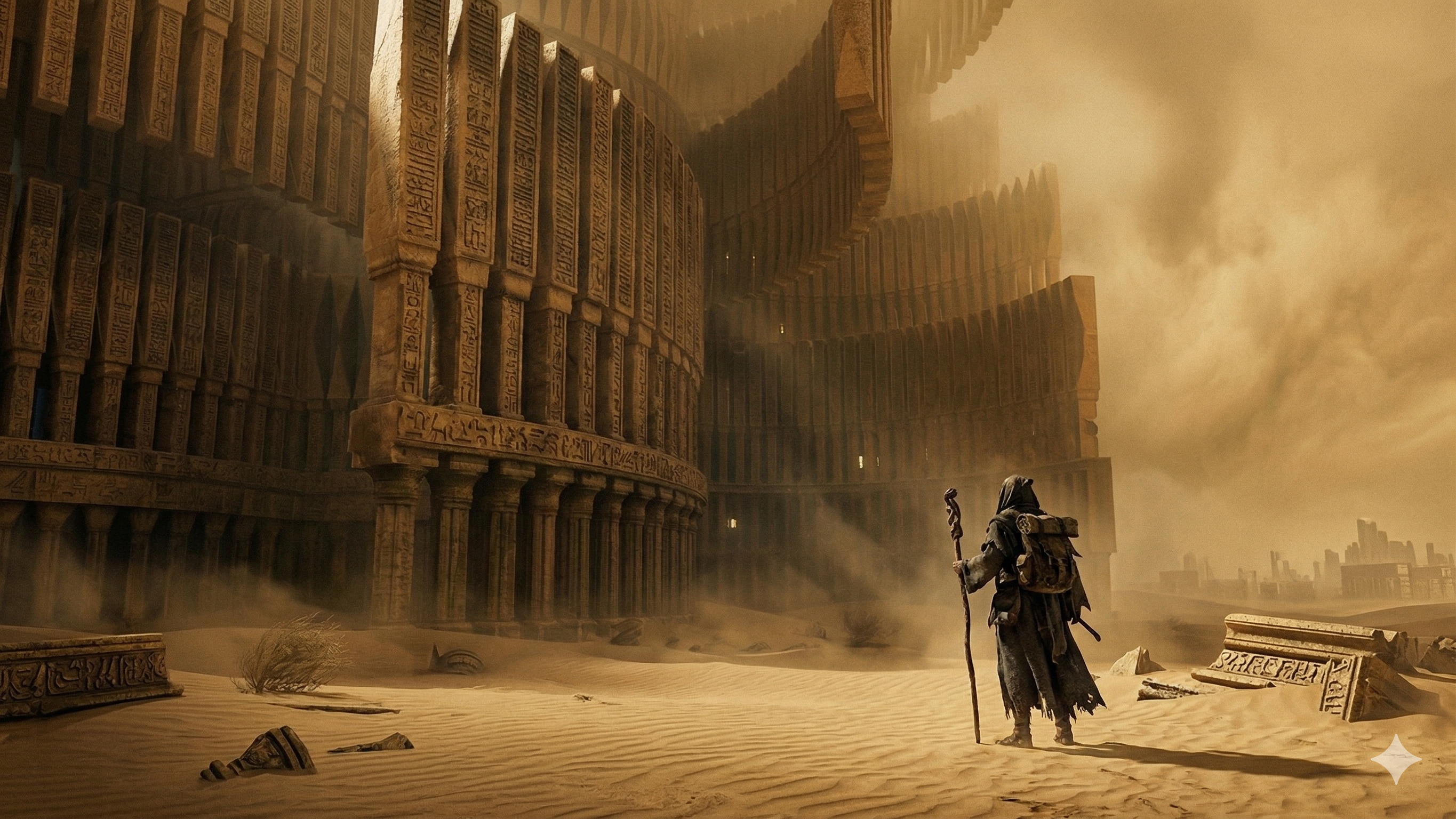
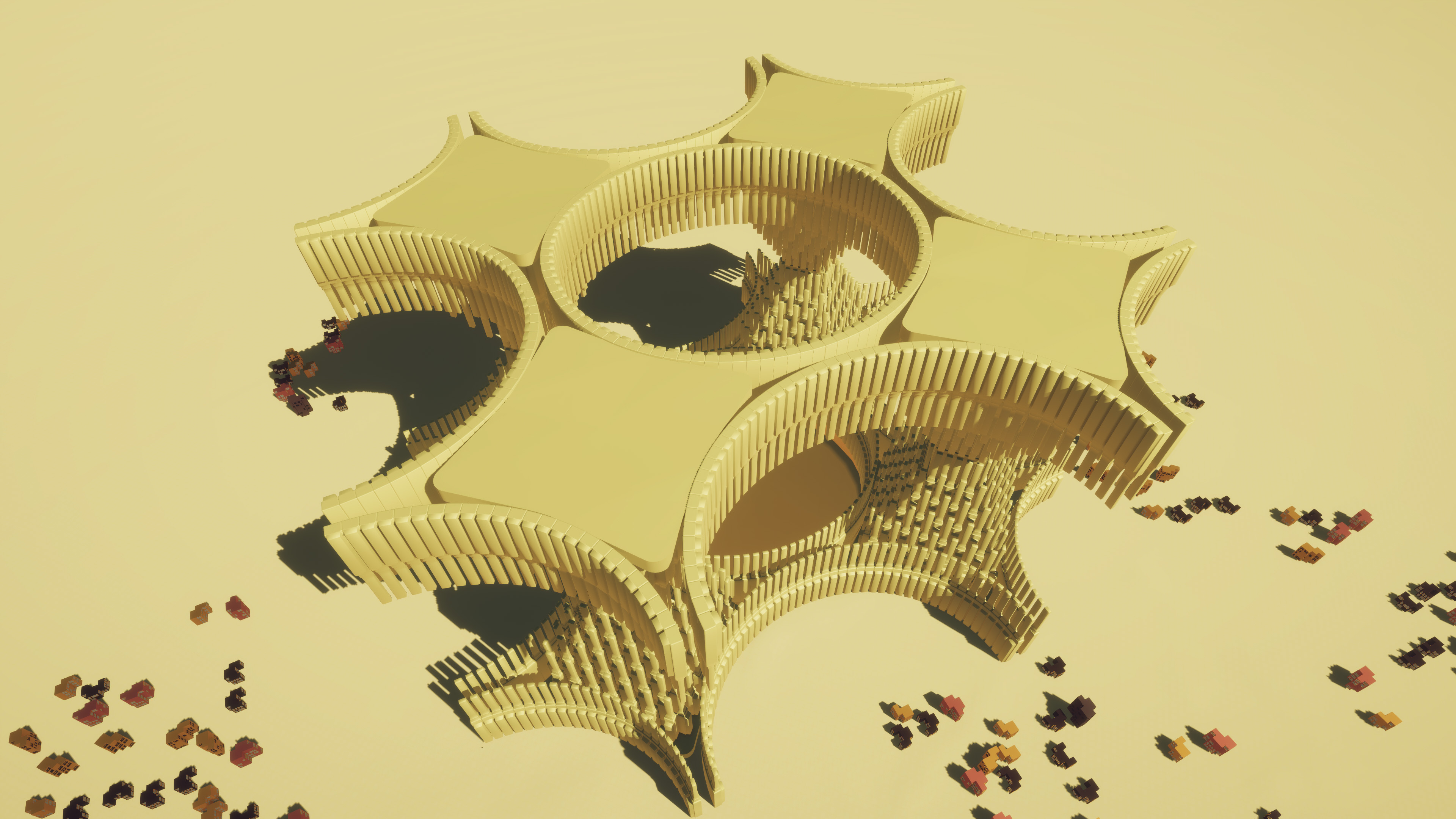
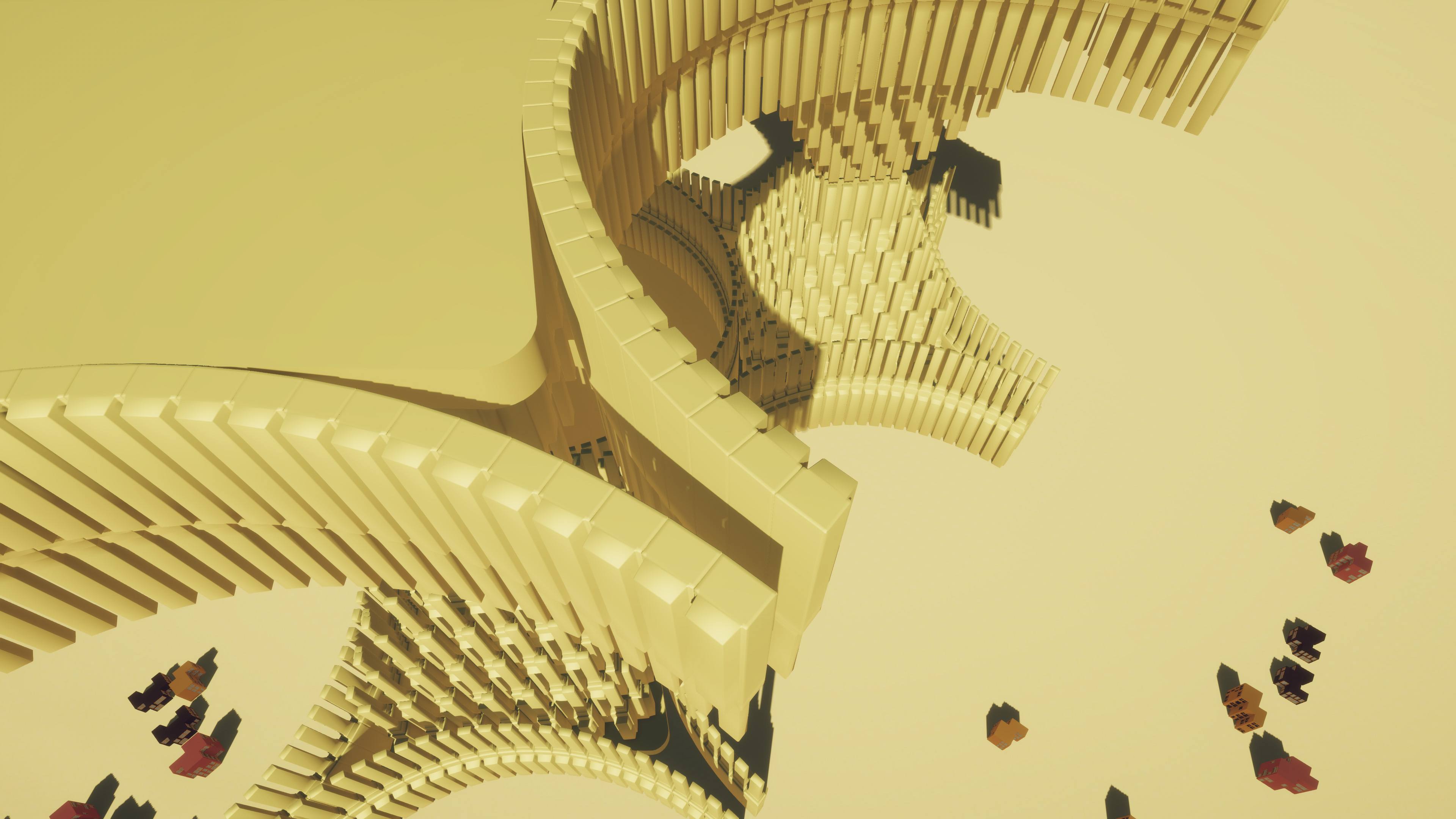
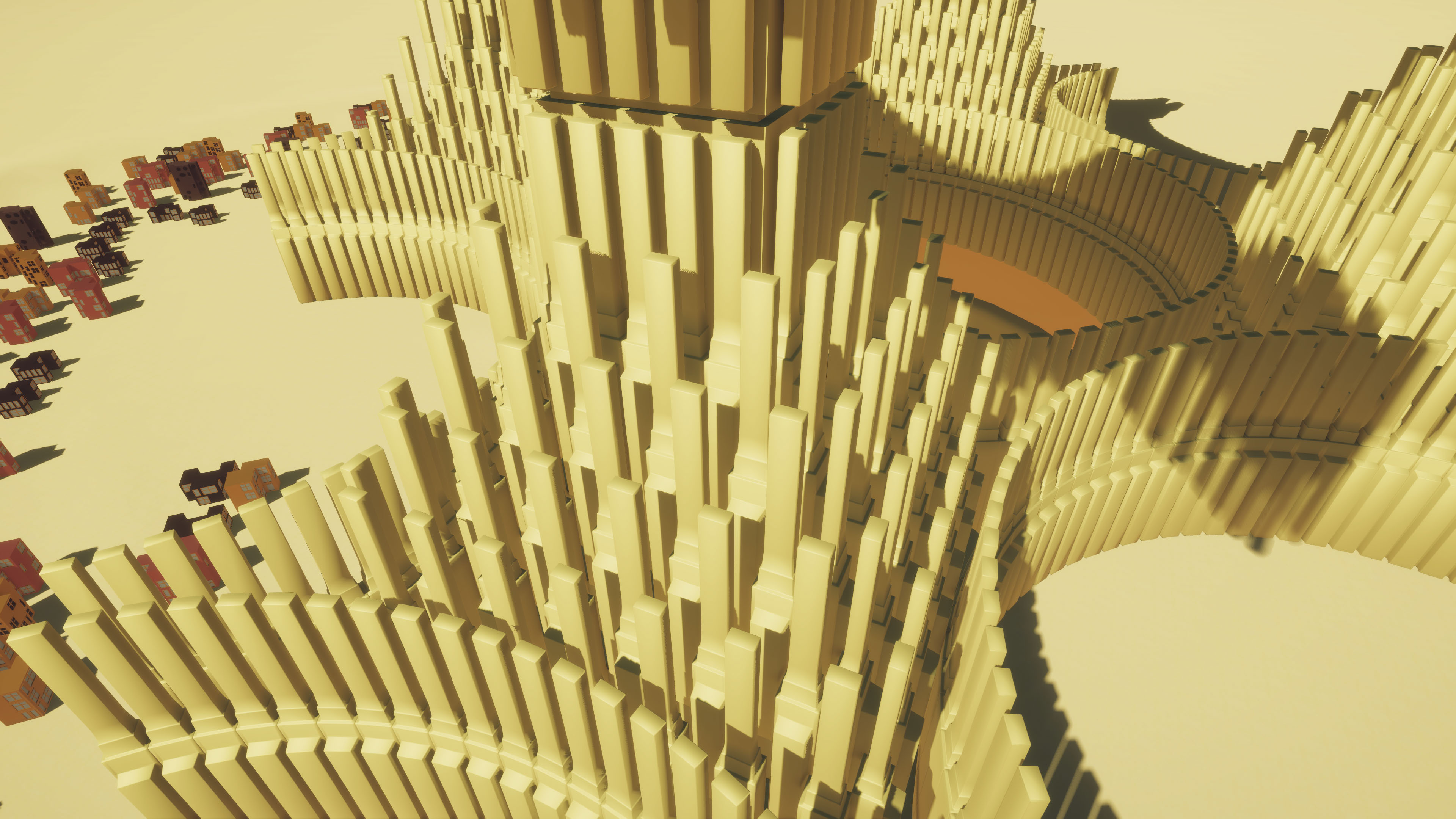
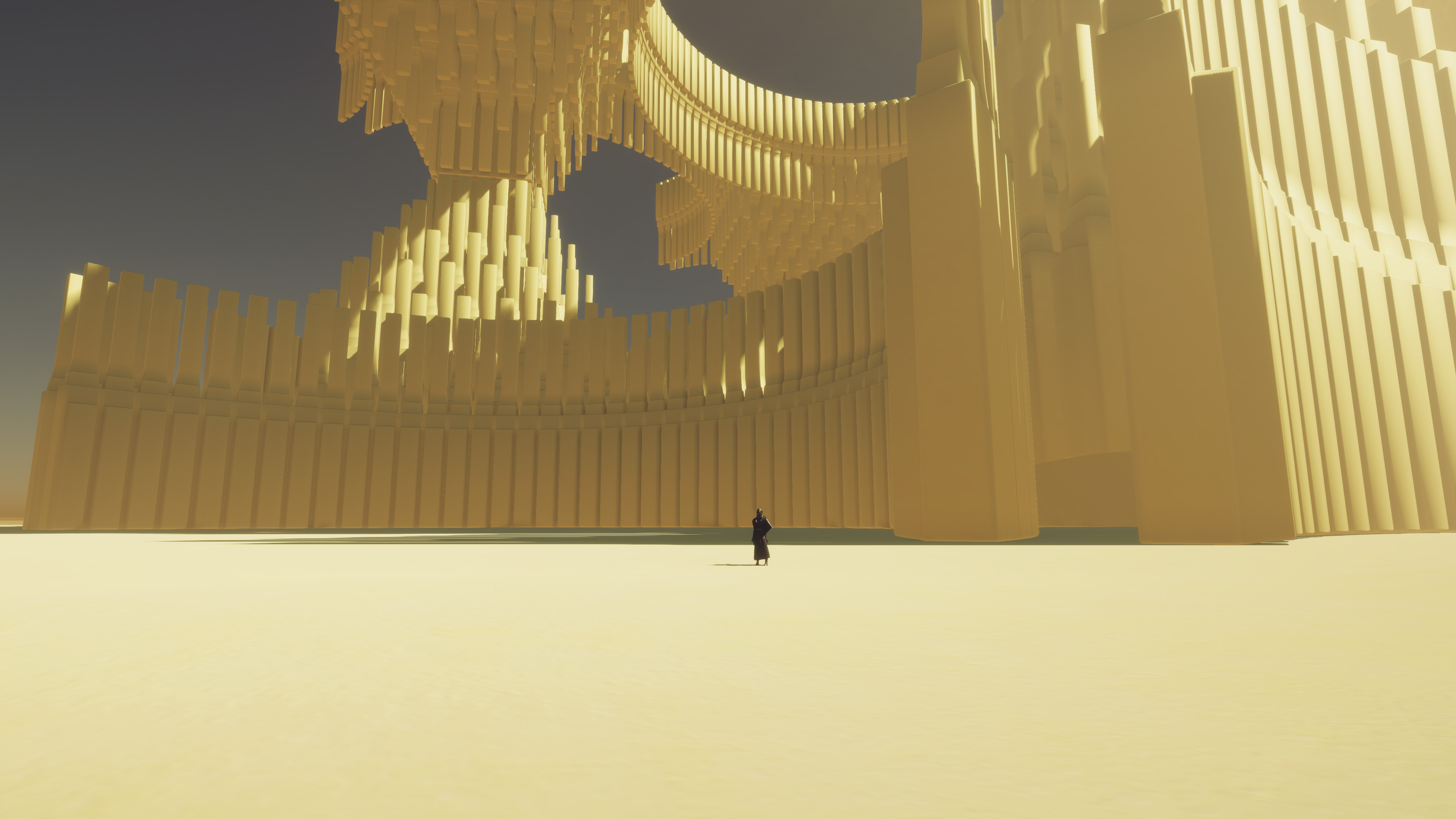
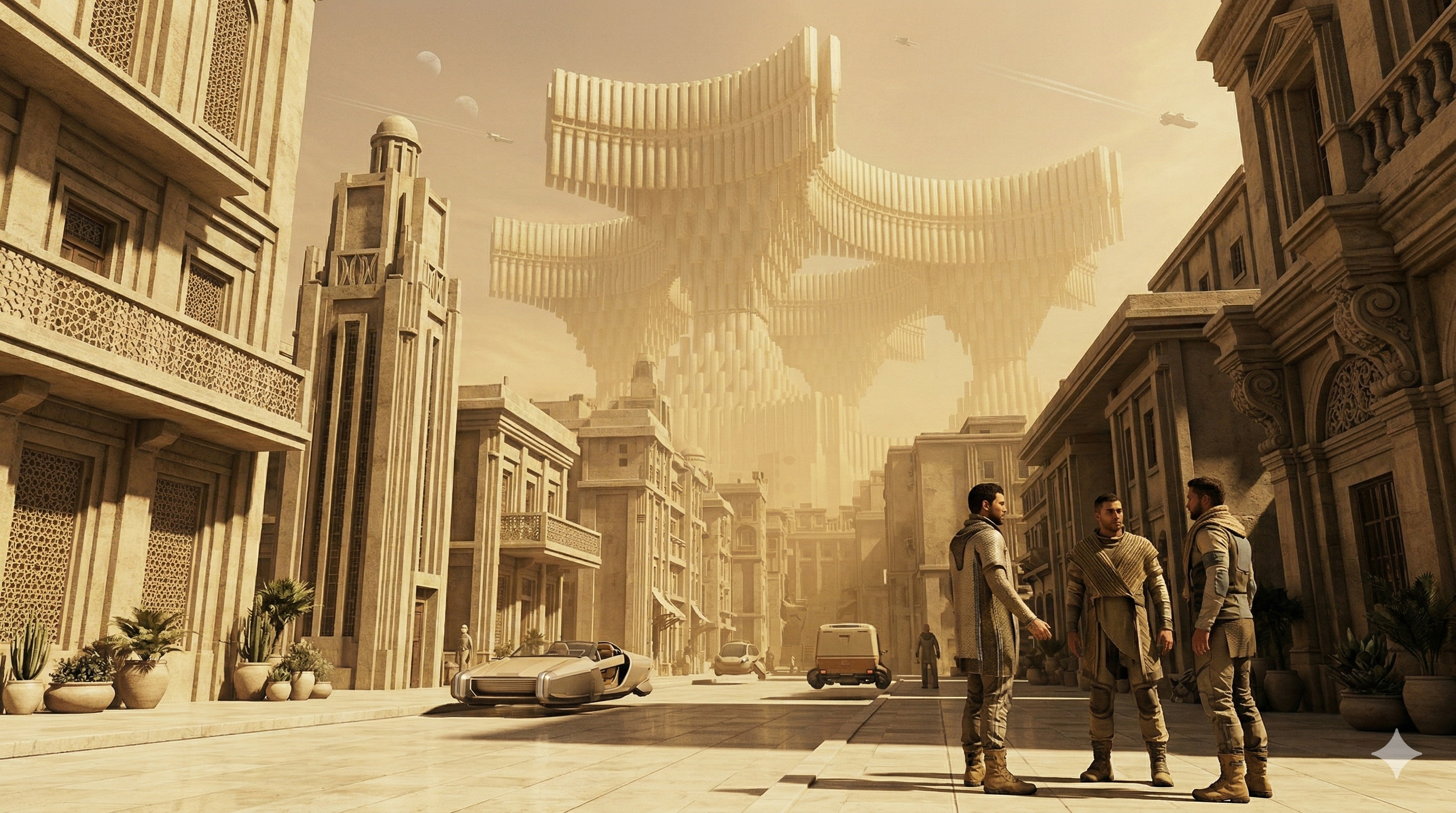
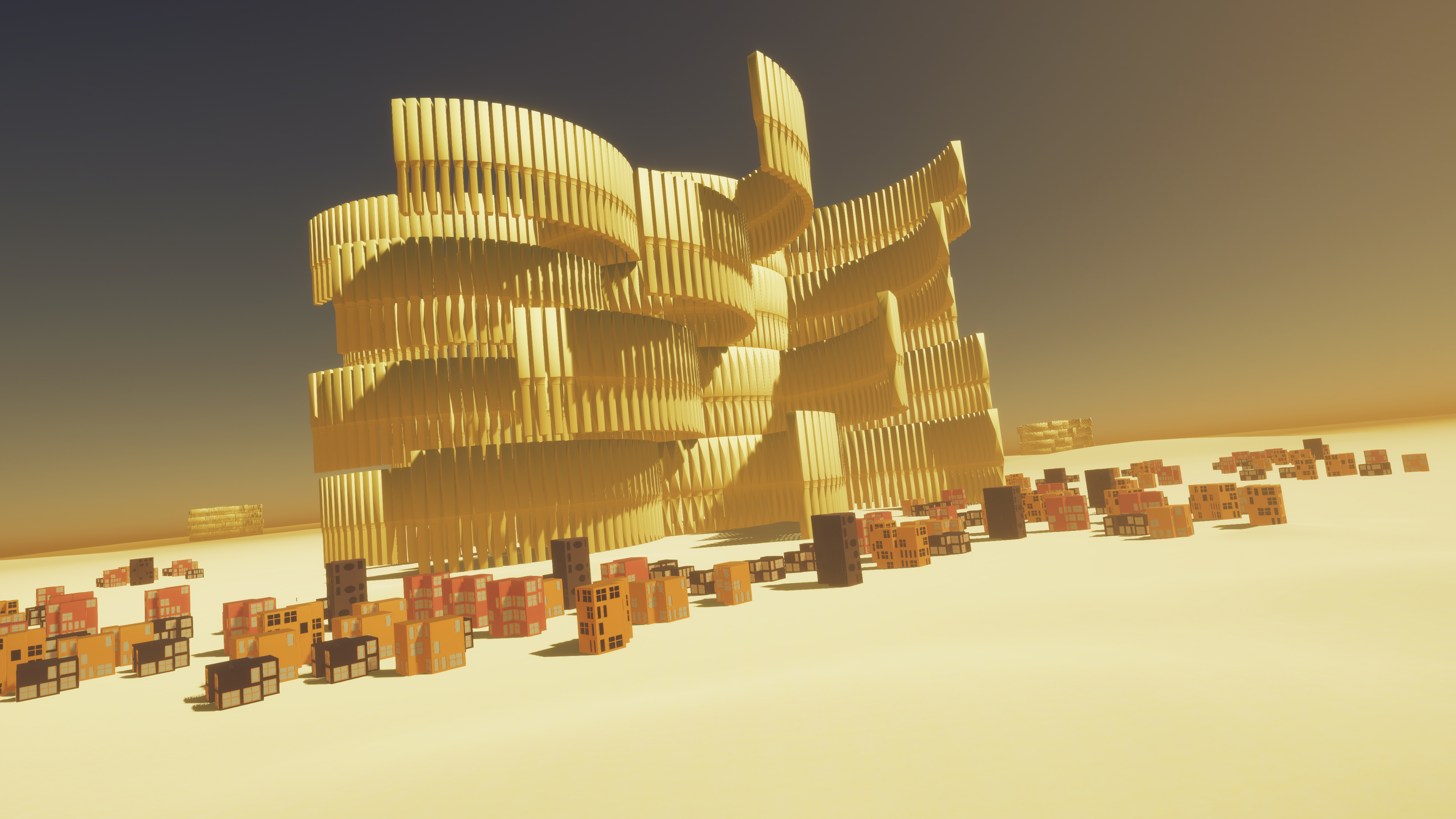
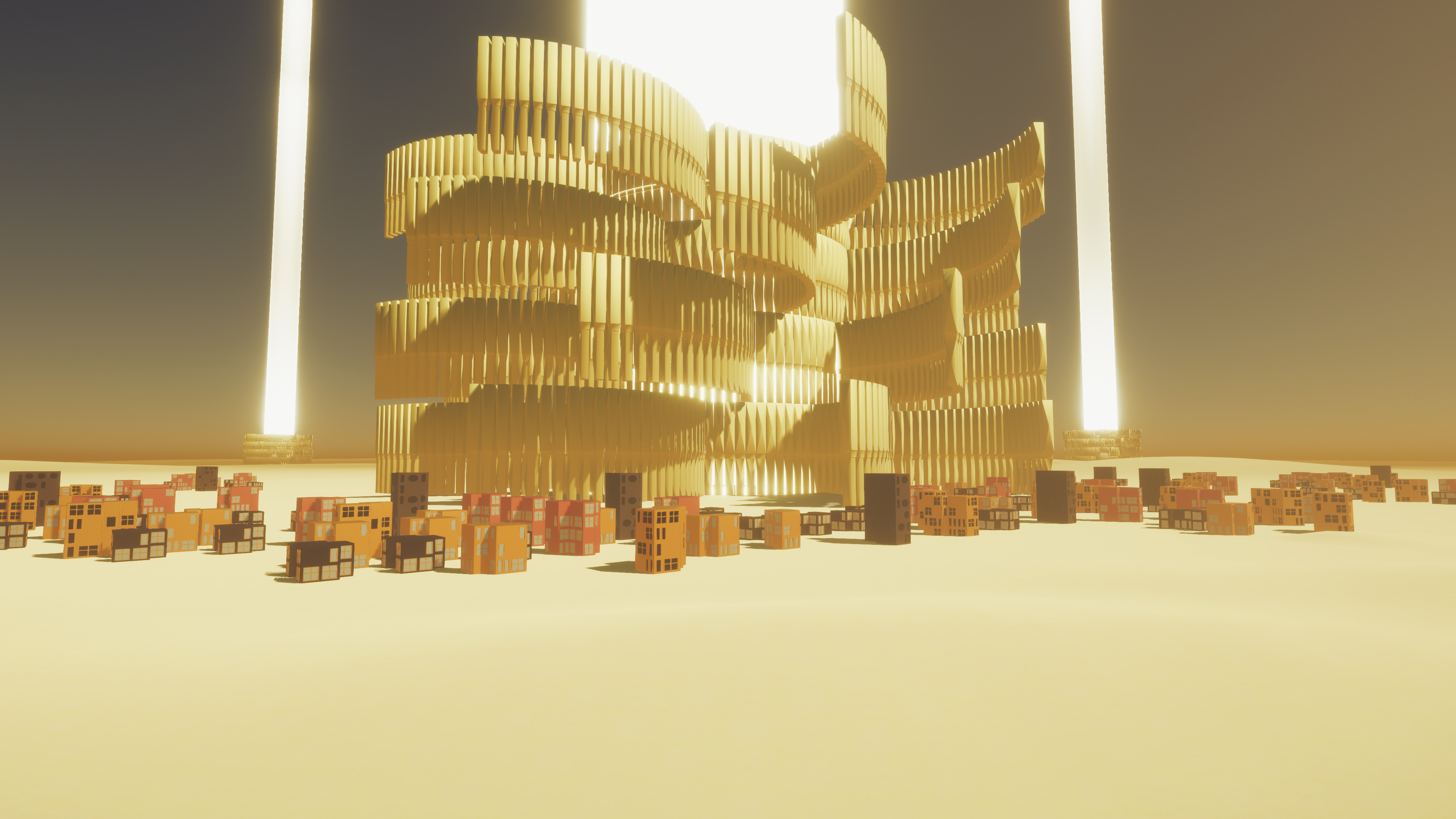
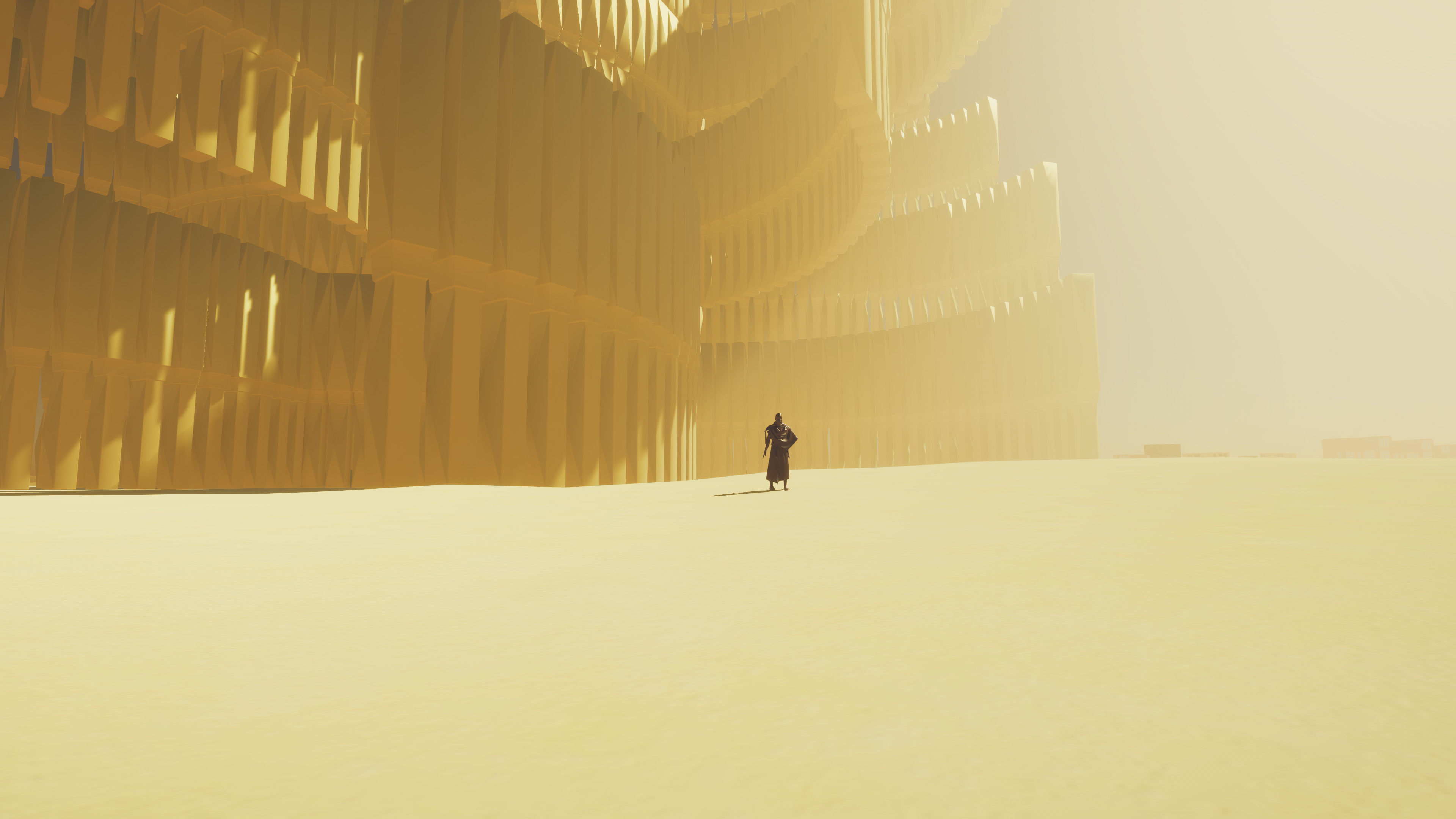
Bringing the reconstruction into Unity shifted the project from analysis into atmosphere. The engine framed the subject spatially — exploring lighting, depth, and environmental mood to present the structure as a place, not just a model.
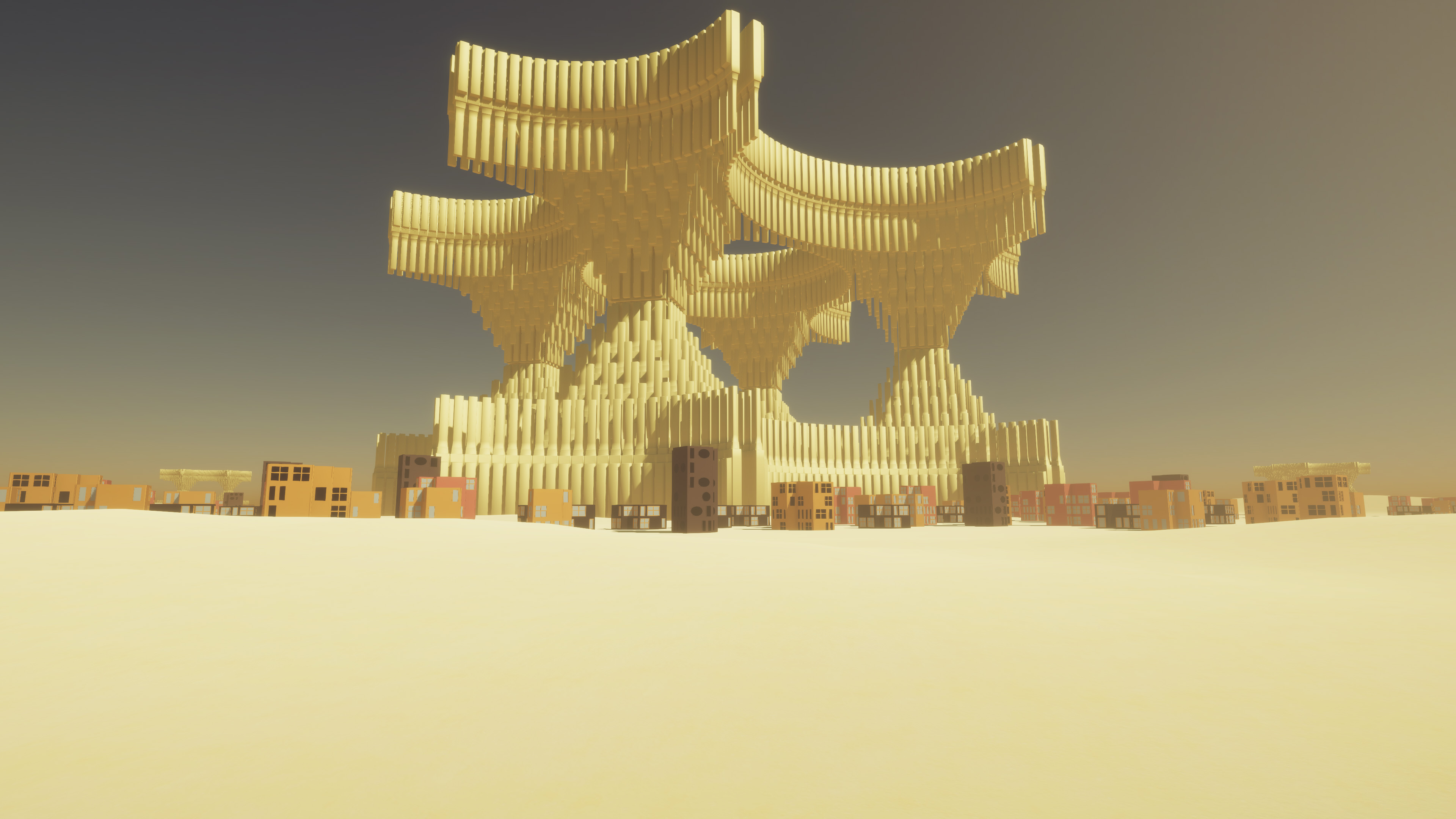
AI Enhanced — Nano Banana
Phase 05
Remake — My Interpretation
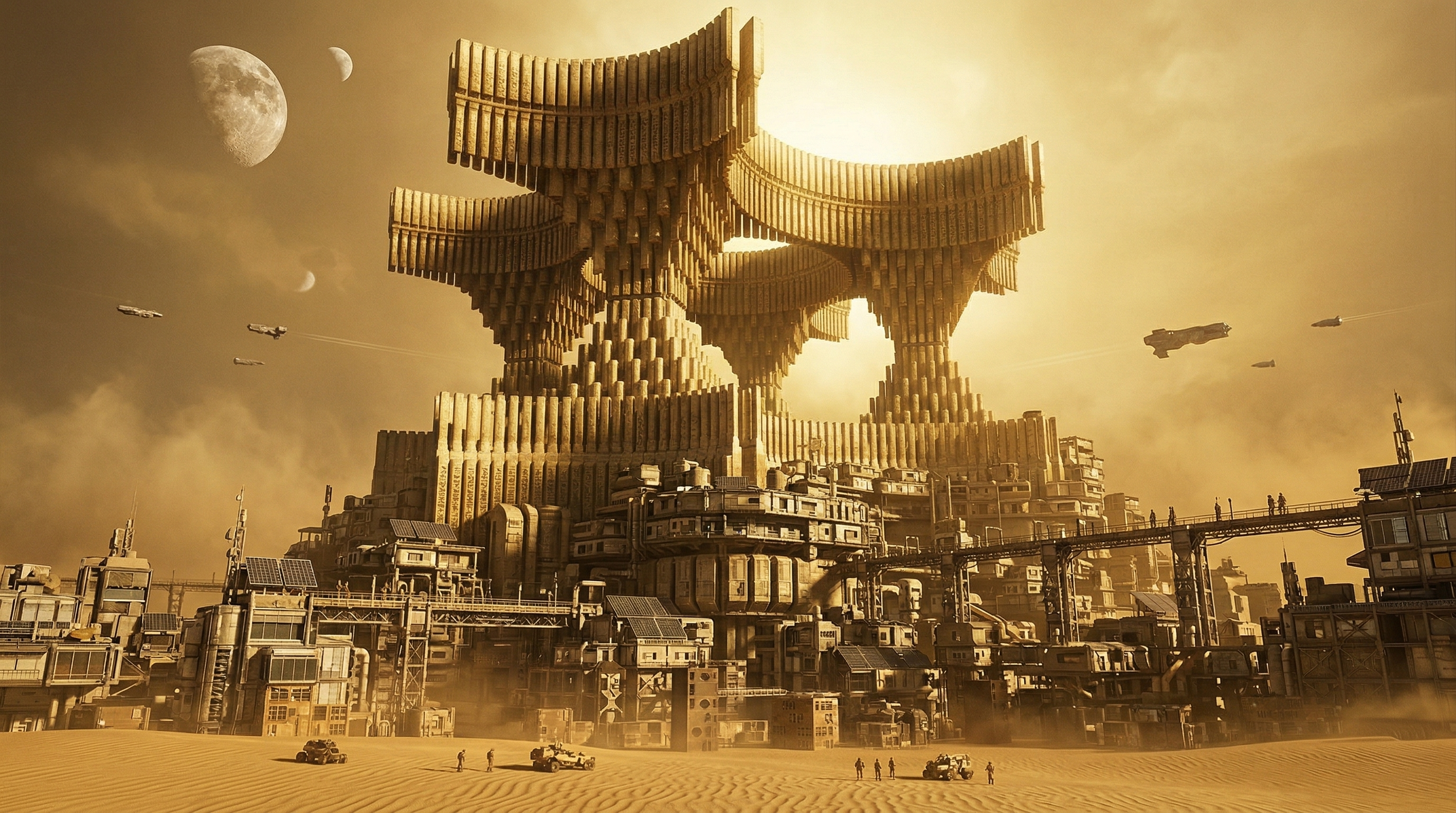
The reconstruction phase was the foundation. The remake was the departure. After studying the Sister Shrine closely enough to rebuild it, the next step was to reshape it — keeping the underlying design logic but pushing the form, materiality, and mood through my own interpretation.
This is what separates a copy from a study. Understanding the source deeply enough to reinterpret it rather than just reproduce it.

AI Enhanced — Nano Banana