A VR reimagining of PopCap's Zuma — the classic marble-chain shooter rebuilt for room-scale virtual reality.
360° target acquisition, motion-controller aiming, and an ancient world forged from platonic solids and elemental geometry.
PopCap's mid-2000s arcade classic — a deceptively simple marble-shooter loop that became the starting point for an entirely new VR spatial experiment.
Shoot colored orbs to match and clear a chain before it reaches the skull. Simple, addictive — and completely untested in 3D space.
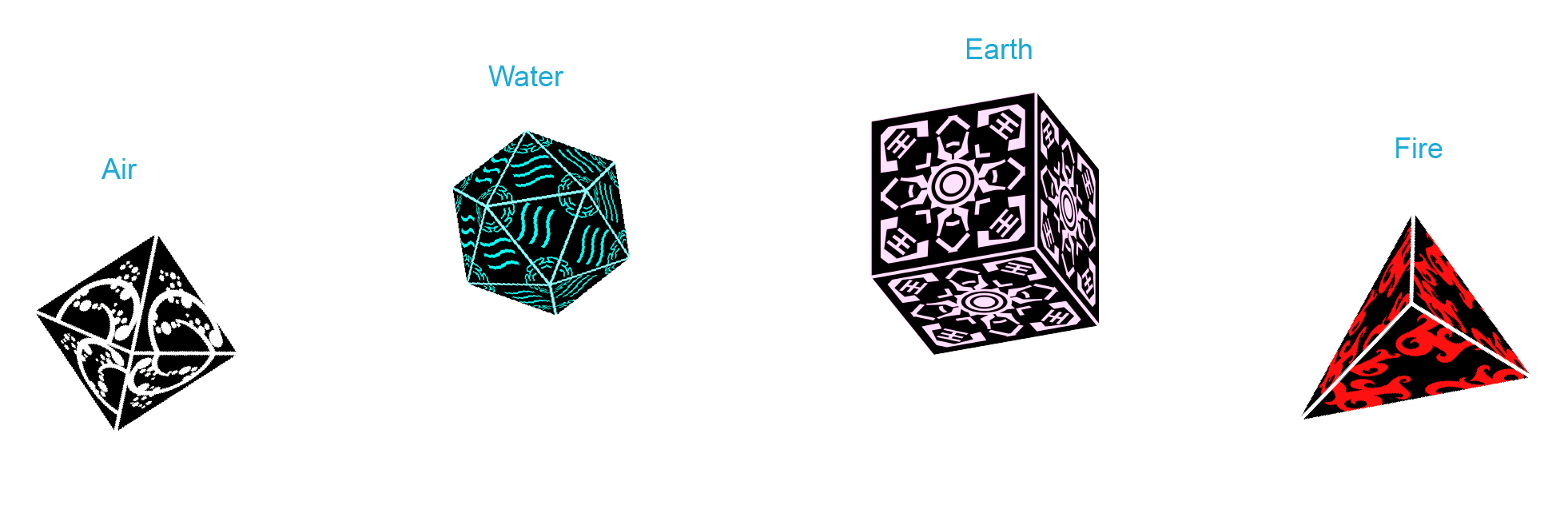
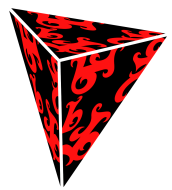
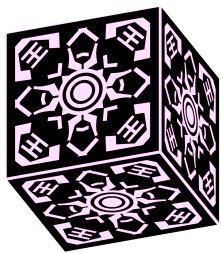
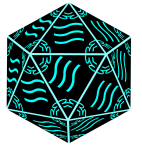
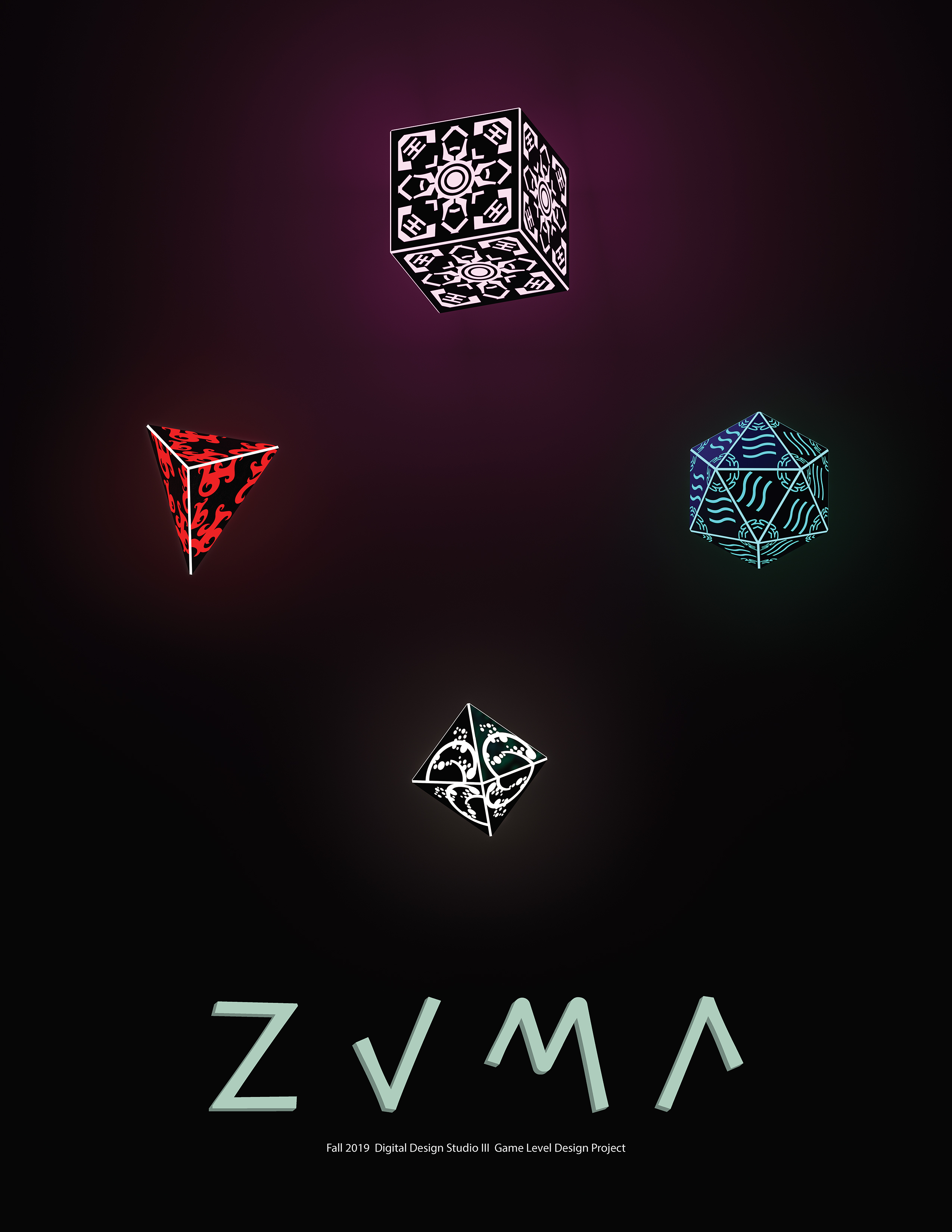
The Egyptian aesthetic gave the world its theme. Each platonic solid maps to a classical element — Fire, Air, Earth, Water, Aether — making the orbs feel ancient and alive.
Zuma (2003) and Zuma Deluxe (2004) by PopCap Games. A marble-shooting arcade game where players control a stone frog, shooting colored balls to form matches of three or more and clear a chain winding toward a pit.
What happens when a flat 2D arcade loop enters full 3D space? Does 360° freedom make the mechanic richer, or does it break the tension that made the original work? This prototype was built to find out.
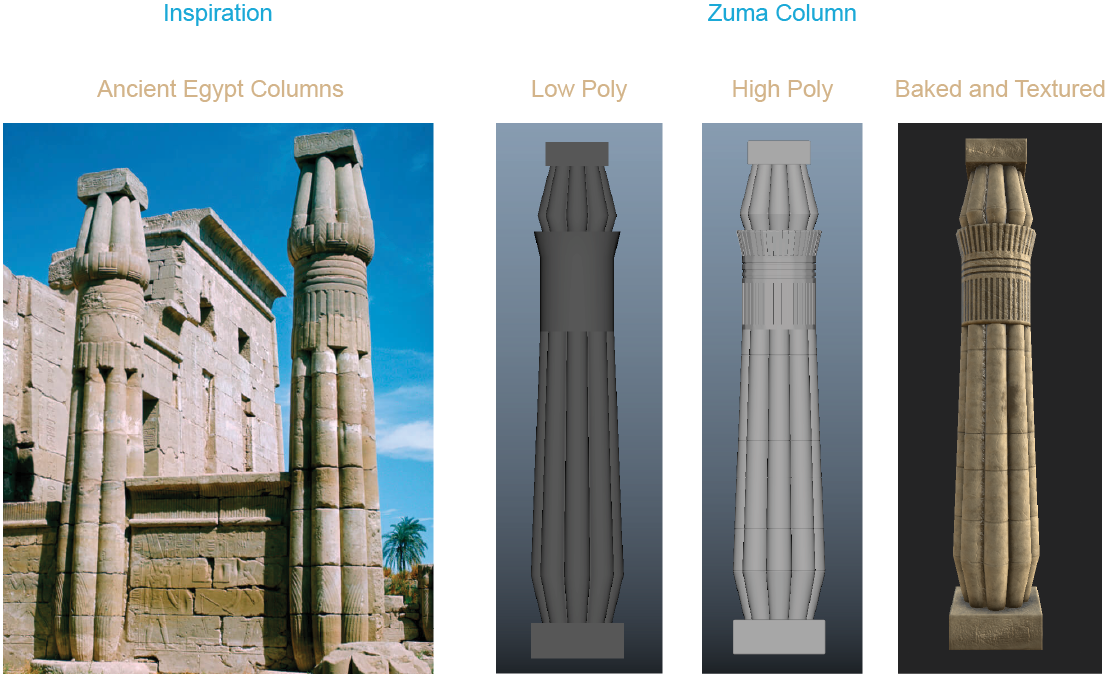
Rather than recreate PopCap's frog temple, the prototype builds a new mythology — Ancient Egyptian architecture fused with sci-fi materials, where platonic solids serve as both projectile and puzzle element.
Built in one semester as a focused Unity VR learning project — covering XR Toolkit setup, controller input mapping, locomotion systems, and full scene management for room-scale headsets.
The core mechanic of Zuma — shoot a colored ball to match three and clear the chain — is rebuilt for VR. Players stand in the center of a 360° arena and use physical controller aiming to fire. Spatial awareness and depth perception replace the flat screen's abstraction.
Custom environment assets built around an Ancient Egyptian aesthetic — columns, gates, and pedestals — combined with five distinct elemental zones. Each platonic solid is modeled in Maya, rendered in Octane, and rebuilt as an optimized real-time mesh for VR performance.
"In Ancient Greece, Plato argued that the universe is built from five perfect solids. In Zuma VR, they are your ammunition."
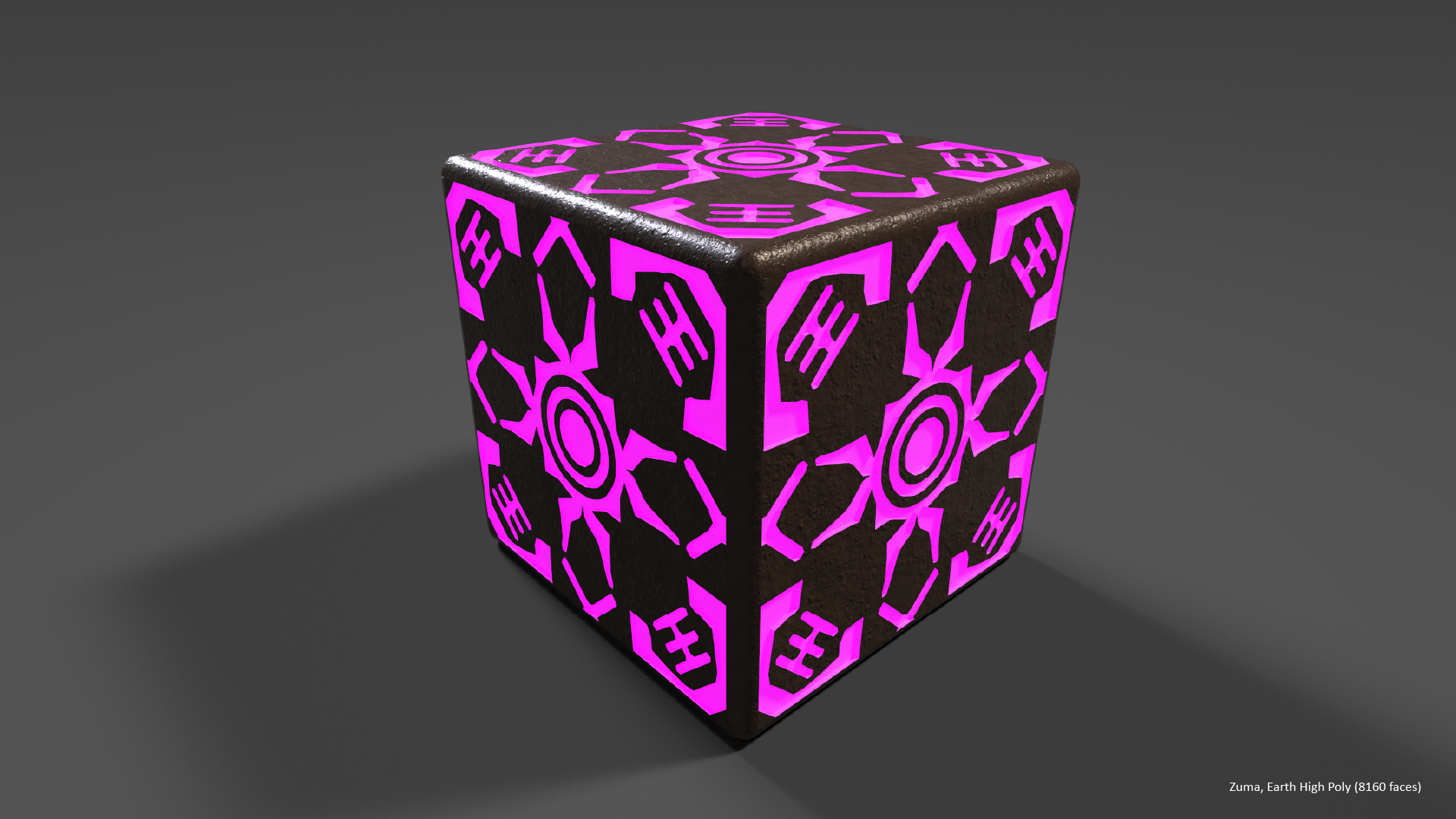
The world theme blends Ancient Egyptian architecture with clean sci-fi forms. The primary interactables are "magical solids" — low-poly, emissive objects derived from the five platonic shapes. Each solid is mapped to a classical element: Tetrahedron to Fire, Octahedron to Air, Hexahedron to Earth, Icosahedron to Water, and Dodecahedron to Aether.
These objects are modeled in Maya and rendered in Octane for high-fidelity reference renders, then rebuilt as optimized real-time meshes for Unity VR. The Egyptian columns, gates, and pedestals were custom-built to give the space a sense of ancient scale.
Concept boards, greybox studies, high-poly modeling, and iteration logs from the full semester.
All assets modeled in Maya and rendered in Octane. Drag to rotate each relic in 3D below.
Gameplay capture from the alpha build and the texture pattern creation process.
All 3D artifacts — columns, pedestals, gates, and magical solids — are live on Sketchfab. Rotate, zoom, and inspect the geometry behind the Zuma VR world.